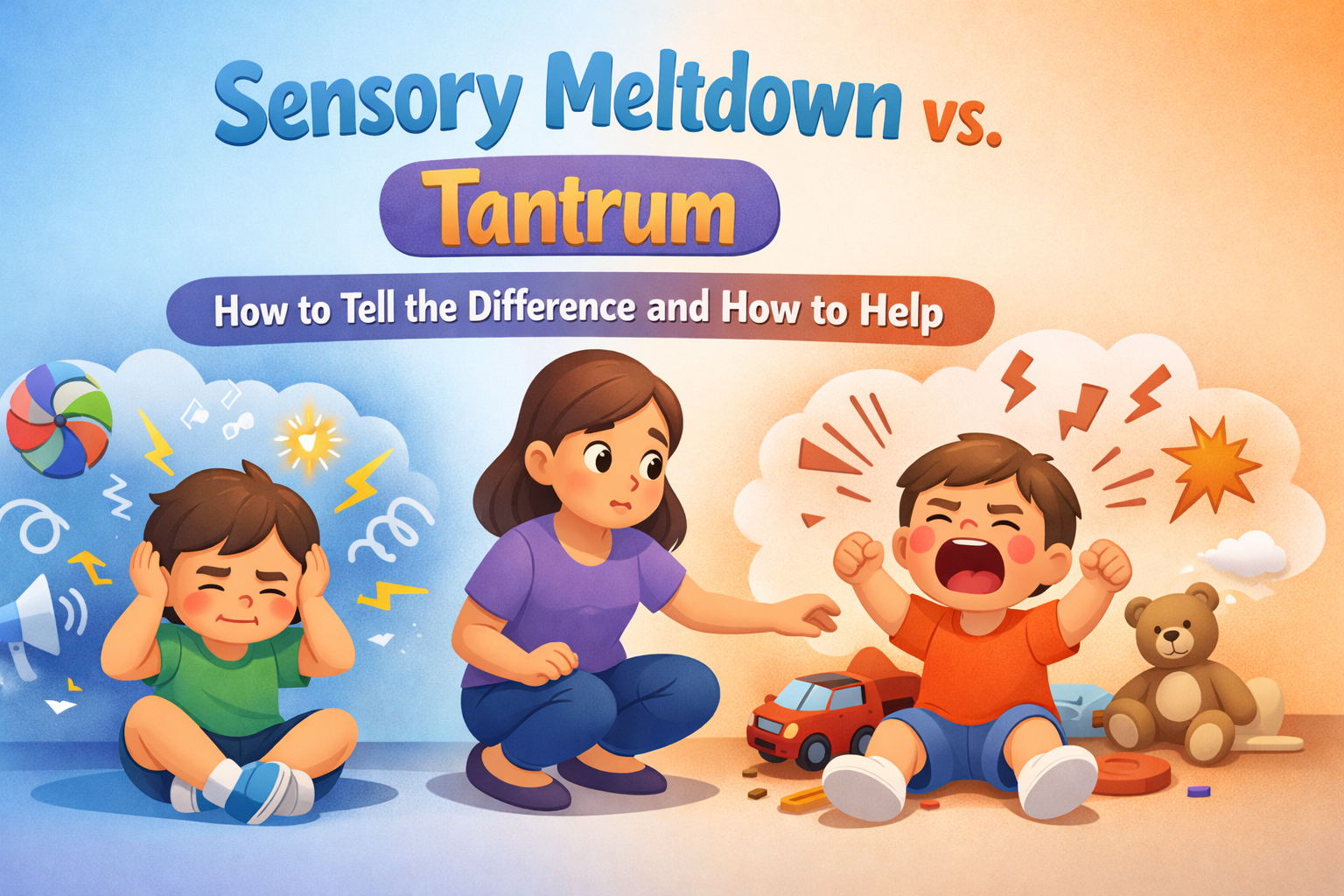

Picture this: You are in a crowded grocery store. Suddenly, your child falls to the floor, screaming, kicking, and sobbing uncontrollably. Passersby offer sympathetic (or judgmental) looks. You feel your own stress levels rising. Is this just “terrible twos” behavior, or is something else going on?
For parents, distinguishing between a Temper Tantrum and a Sensory Meltdown is one of the most critical parenting skills to master. Why? Because the strategy that stops a tantrum will often make a meltdown worse, and vice versa.
Table of Contents
What is a Temper Tantrum?
A tantrum is goal-oriented behavior. It is a power struggle.
- ** The Trigger:** The child wants something (a toy, a candy) or wants to avoid something (putting on shoes, leaving the park).
- The Nature: The child is in control. They might pause their screaming to see if you are looking at them. They check to see if their behavior is working.
- The End Game: The tantrum usually stops abruptly if they get what they want, or once they realize that the behavior won’t work.
How to Handle a Tantrum: The most effective strategy is often ignoring the behavior (while ensuring safety) and holding your boundary. If you give in, you teach the child that screaming is an effective way to get a reward.
- “I understand you are mad, but we are not buying candy today.”
- Stay calm. Do not negotiate.
What is a Sensory Meltdown?
A meltdown is biological. It is a neurological response to being overwhelmed. It is not “bad behavior”; it is a fight-or-flight reaction.
- The Trigger: Too much sensory input. Loud noises, bright lights, scratchy clothing, hunger, or exhaustion. Their nervous system is like a cup that has overflowed.
- The Nature: The child is NOT in control. They are not looking at you to see your reaction. They may not even hear you speaking. They are in survival mode.
- The End Game: The meltdown ends only when the child’s nervous system calms down or when they wear themselves out physically. Giving them a candy bar usually won’t stop it because they aren’t crying for the candy; they are crying because their brain is overloaded.
Key Signs: Is it a Meltdown?
- No Audience Required: They will continue screaming even if you leave the room or if no one is watching.
- Safety Risks: They might bang their head, run away without looking, or hurt themselves unintentionally because they have lost body awareness.
- The “Hangover”: After a tantrum, a child might snap back to normal quickly. After a meltdown, a child is usually exhausted, needs to sleep, or is very quiet for the rest of the day.
How to Handle a Sensory Meltdown
You cannot “discipline” a child out of a meltdown. You must help them regulate.
- Reduce Input: Immediately remove the child from the environment. Take them to the car, a quiet corner, or outside.
- Use Deep Pressure: Many children find deep pressure calming. A tight hug (if they allow it) or wrapping them in a heavy blanket can help reset the nervous system.
- Limit Talk: Do not try to reason with them or ask questions like “What’s wrong?” Their logic brain is offline. Use a soft, low voice and say very little. “You are safe. I am here.”
- Co-Regulation: Your calm is their calm. If you panic, they escalate. Take deep breaths yourself.
Prevention is Key
If you notice your child is prone to meltdowns, focus on prevention.
- Identify Triggers: Does it always happen after school? (Restraint collapse). Does it happen in loud places? (Auditory sensitivity).
- Sensory Diet: Incorporating heavy work (pushing, pulling, jumping) at places like Little Land helps regulate the nervous system before it hits the boiling point.
Understanding this difference changes everything. It moves you from thinking “My child is giving me a hard time” to “My child is having a hard time.” And that shift in perspective is the first step toward peace.