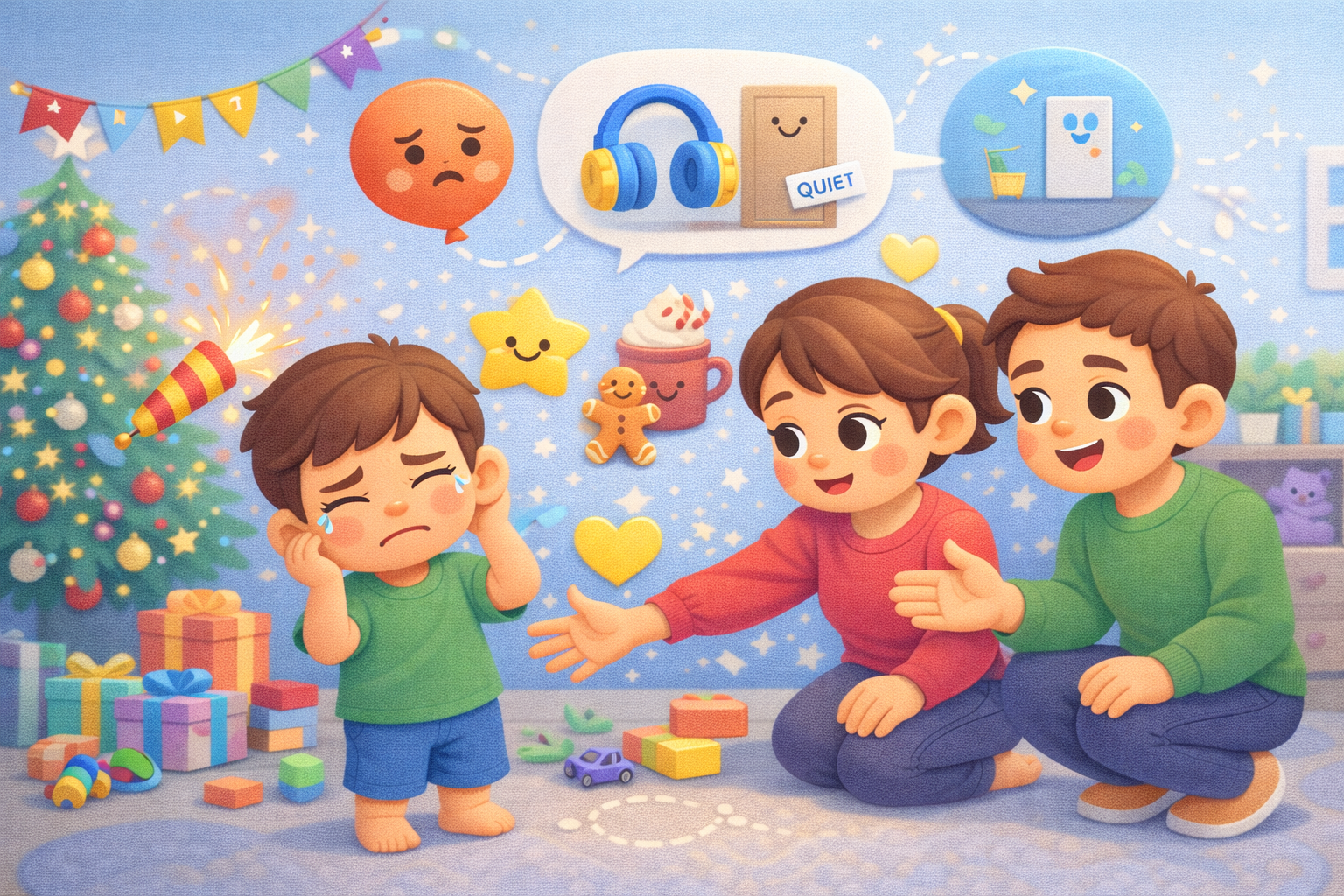

The holidays are marketed as the “Most Wonderful Time of the Year.” But for a child with sensory processing sensitivities (or just a typical toddler), they can easily become the “Most Overwhelming Time of the Year.”
Table of Contents
Think about it:
- Visuals: Flashing lights, bright decorations.
- Auditory: Loud music, crowded rooms, fireworks.
- Tactile: Itchy formal clothes, relatives demanding hugs.
- Routine: Gone. Bedtimes are late, sugar intake is high.
It is a perfect storm for a meltdown. But it doesn’t have to be a disaster. With a little planning, you can create a sensory-friendly holiday that everyone enjoys.
1. The Pre-Game Briefing (Managing Relatives)
The biggest stressor is often well-meaning family members. “Why won’t he give Grandma a kiss?” “He’s being so wild!” Send a text or email before the gathering:
- “Leo is in a phase where he is sensitive to noise and touch. We are practicing ‘high-fives’ instead of hugs. Thanks for helping us with this!”
- Setting the boundary beforehand protects your child from being forced into uncomfortable interactions.
2. Dress for Comfort, Not Instagram
We all love a cute holiday outfit. But a stiff shirt with a tight collar or a scratchy tulle dress can torture a sensory-sensitive child. If they are uncomfortable physically, their fuse will be short. Compromise: Let them wear the fancy outfit for 10 minutes for a photo, then change into soft cotton “party pajamas” or comfortable leggings. A happy child in sweatpants is better than a screaming child in a suit.
3. Create a “Quiet Zone”
Upon arriving at a party (or in your own home), designate a Safe Space. It could be a guest bedroom, a tent in the corner, or even the car. Tell your child: “If it gets too loud and you feel like you are going to explode, you can come hide in here.” Pack a Sensory Survival Kit:
- Noise-canceling headphones.
- A fidget spinner or stress ball.
- A tablet (yes, screens are great tools for decompression).
4. Stick to the “Anchor” Routines
You can’t keep the whole schedule, but keep the “anchors.”
- Food: If your child is a picky eater, feed them a solid meal before the party. Being “hangry” + overstimulated is dangerous. Bring their safe snacks.
- Sleep: Try to keep wake-up times and nap times consistent, even if bedtime is later.
5. The Escape Hatch
Drive your own car. Do not rely on a ride from a relative who might want to stay until midnight. Have a code word with your partner. If one of you says “Pineapple,” it means: The child is done. We need to leave in 10 minutes, no negotiations. Leaving early on a high note is better than staying late and ending with a tantrum.
6. Focus on Connection, Not Tradition
If the traditional holiday parade is too loud, skip it. Watch it on TV with hot cocoa instead. If the mall Santa is terrifying, write him a letter instead. You don’t have to do things just because “we always do them.” Create new traditions that fit your child’s needs.
Holidays are about joy. If skipping the big party means you have a peaceful night at home playing board games, that is a win.