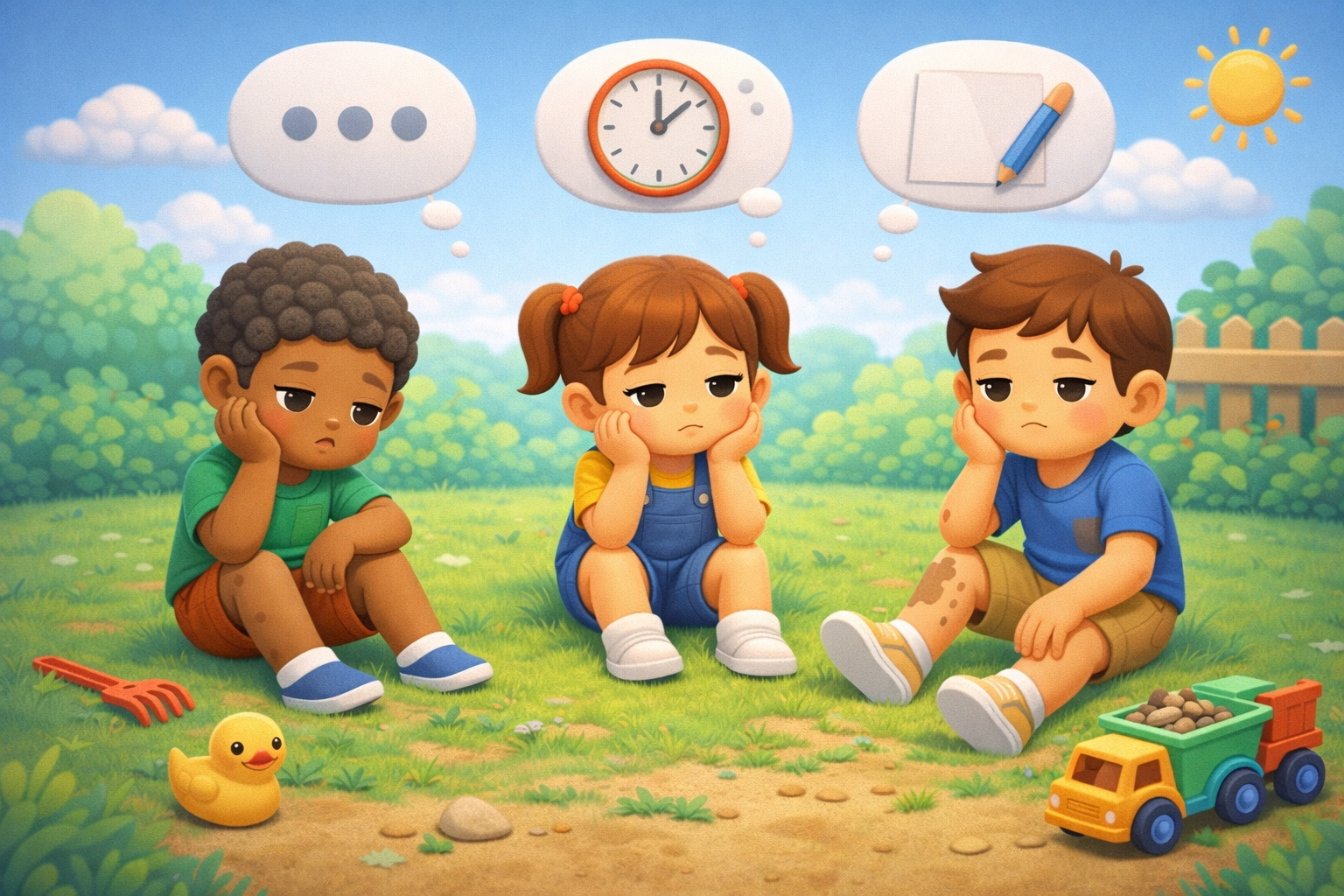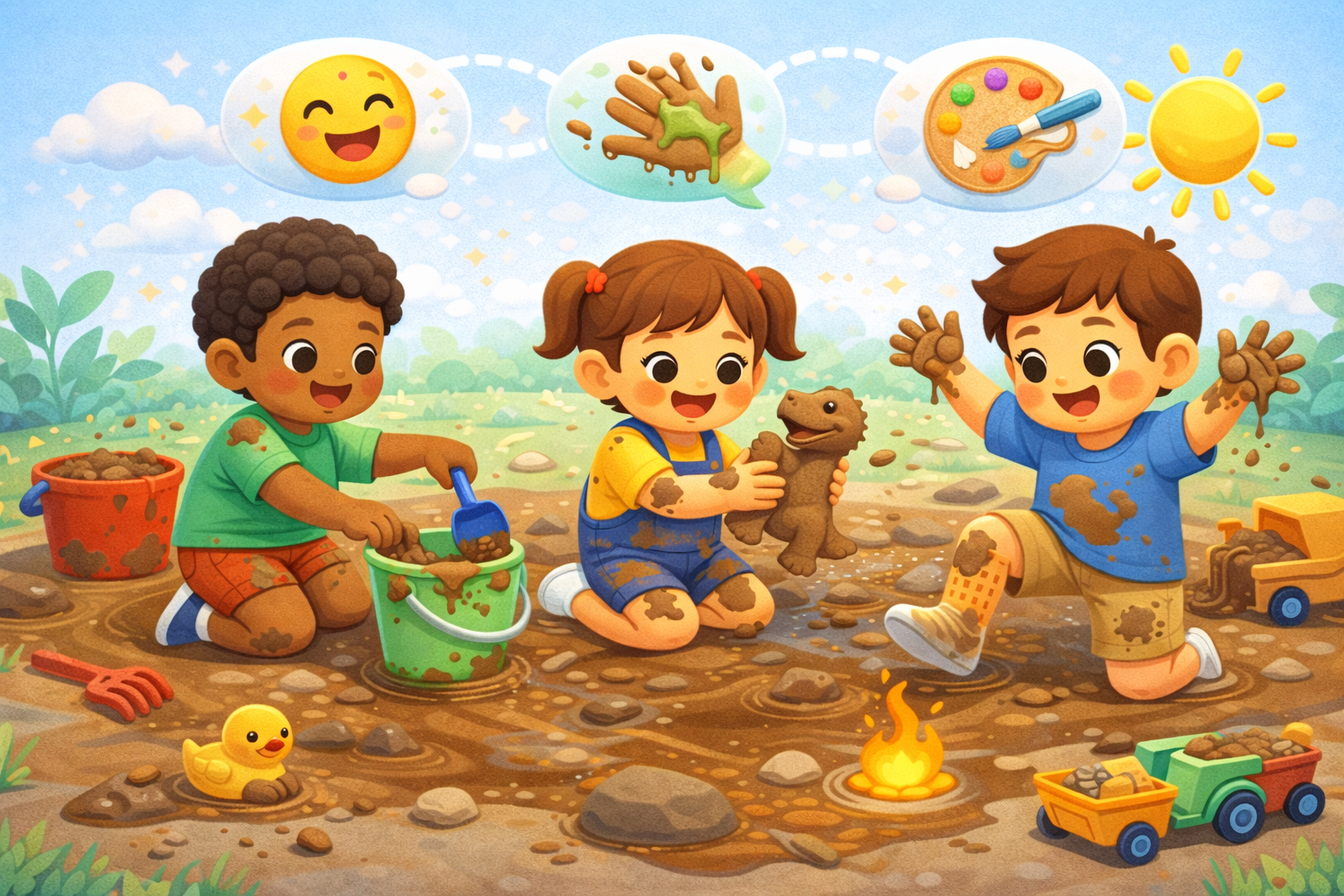

In today’s competitive world, the pressure on parents starts early. Very early. You scroll through social media and see 3-year-olds tracing letters or reciting multiplication tables. You look at your own child, who is currently trying to fit a square block into a round hole or making “soup” out of mud and leaves, and you panic.
“Is he falling behind?” “Should we be doing worksheets?” “Is she ready for school?”
Table of Contents
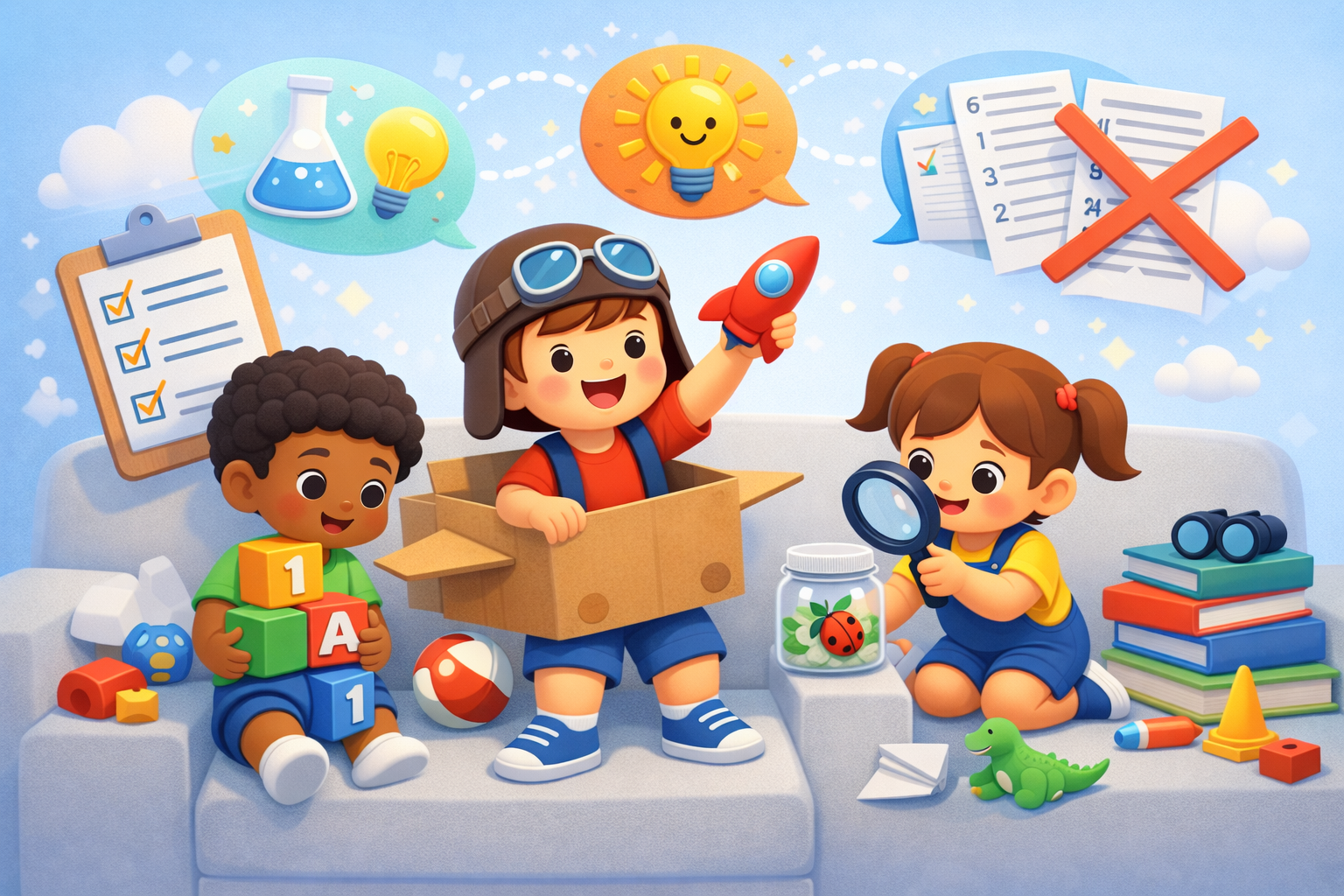
Let’s take a deep breath and look at the science. The prevailing myth is that “play” is a break from learning. The reality, backed by decades of neuroscience and child development research, is that play IS learning. In fact, for young children, play is a far superior method of education than any flashcard ever invented.
The Problem with Early Academics
When we force a 4-year-old to complete a worksheet, we are often teaching them to memorize, not to understand. A child can memorize that “2 + 2 = 4.” But do they understand what “2” actually means? Do they understand quantity? A worksheet is two-dimensional and abstract. A child’s brain is wired to learn through three-dimensional, sensory experiences.
The “Hidden Curriculum” of Play
Let’s break down what is actually happening in a child’s brain during typical play scenarios at a place like Little Land.
1. The Block Corner = Physics & Math When a child builds a tower of blocks, they aren’t just stacking wood.
- Geometry: They are sorting shapes (rectangles vs. squares).
- Physics: They learn about gravity and balance. “If I put this big block on top of this tiny one, it falls.”
- Math: They learn volume and quantity. “I need two more blocks to reach the top.” This is foundational math. A child who physically understands weight and balance will grasp physics concepts in high school much faster than a child who only saw them in a book.
2. The Pretend Grocery Store = Literacy & Economics Watch children playing “shop.”
- Literacy: They are reading labels, making signs, and writing “receipts” (even if it looks like scribbles, they are learning that marks on paper carry meaning).
- Social Studies: They are navigating roles. Who is the cashier? Who is the customer? How does money work?
- Communication: They have to speak clearly to get what they want.
3. The Sensory Bin = The Scientific Method Give a child a bin of water, some cups, and a funnel.
- Hypothesis: “I think this big cup will fill the little cup.”
- Experiment: They pour the water. It overflows.
- Conclusion: “Oops, the big cup has more water than the little cup.” They just performed the scientific method. They tested a theory, observed the result, and adjusted their understanding. No textbook required.
Soft Skills: The Real Predictor of Success
Beyond academics, play teaches the “soft skills” that teachers actually want to see on the first day of kindergarten. Ask any Kindergarten teacher what they wish their students knew, and they won’t say “I wish they knew the alphabet.” They will say:
- “I wish they knew how to share.”
- “I wish they could handle frustration when they lose.”
- “I wish they could listen to instructions.”
These are Executive Functions, and they are only learned through social play. You cannot learn to negotiate turns from an iPad app. You learn it by arguing over a blue shovel in a sandbox.
Re-Framing Your Role
So, if worksheets are out, what is your job? Your job is to provide the environment.
- Provide open-ended toys (blocks, art supplies, dress-up clothes).
- Provide time (unstructured blocks of time where they aren’t rushed).
- Provide space (like the safe, varied environments at Little Land).
The next time you see your child building a fort or mixing “potions” in the bath, don’t interrupt them to practice their ABCs. They are doing serious work. They are building the neural pathways that will one day make them engineers, writers, and scientists.