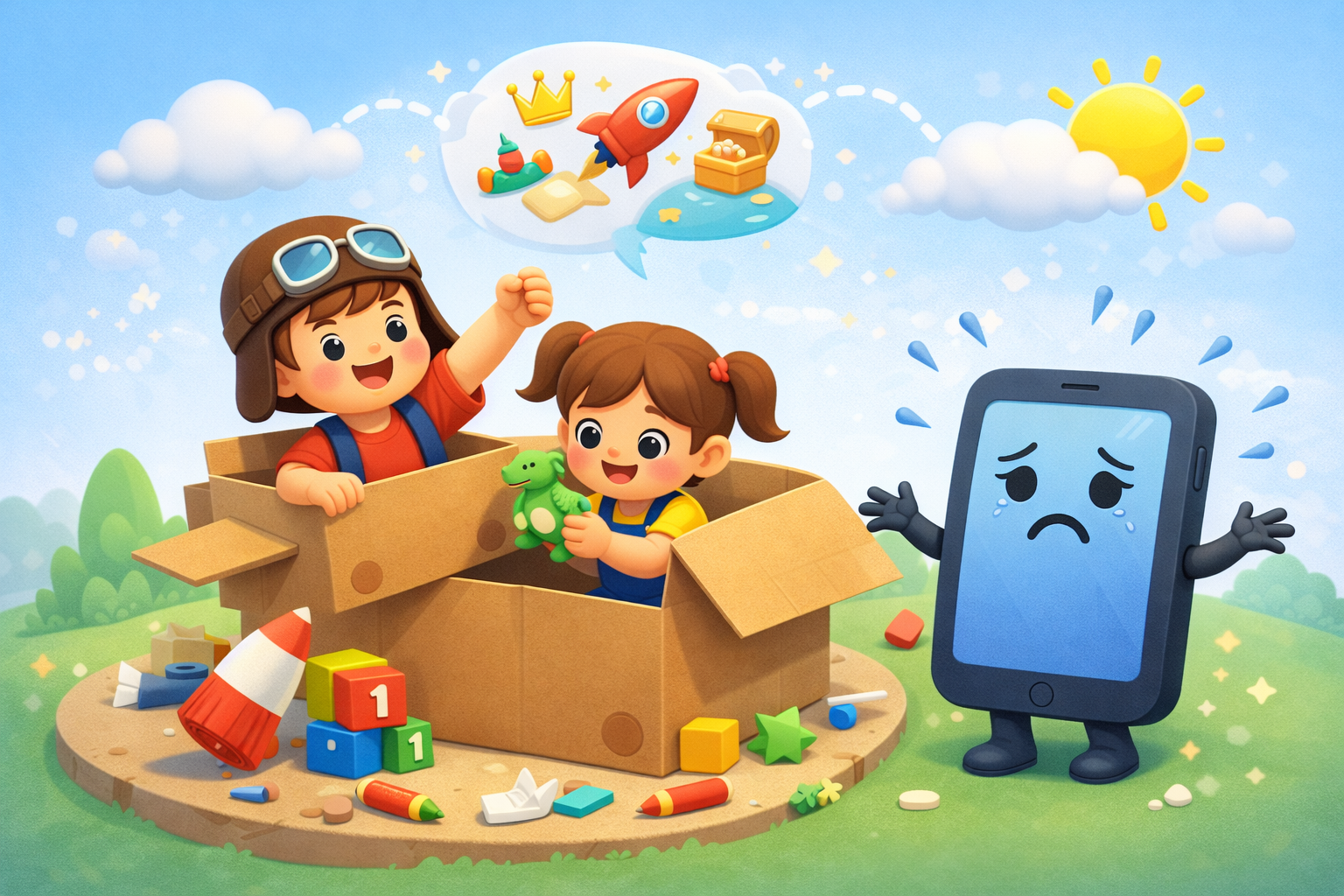

It is the classic Christmas morning paradox: You spend hundreds of dollars on the latest electronic, singing, dancing toy. Your child opens it, plays with it for five minutes, tosses it aside… and spends the next three hours playing with the cardboard box it came in.
Why does this happen? Is your child ungrateful? No. Your child is a genius. They intuitively know something that many toy manufacturers try to hide: The best toys are the ones that do the least.
Table of Contents
This brings us to the concept of Open-Ended vs. Close-Ended Toys. Understanding the difference will save you money and significantly boost your child’s creativity.
The 90/10 Rule of Toys
A good toy should follow the 90/10 rule: 90% of the play comes from the child, and only 10% comes from the toy.
- Close-Ended Toys (Active Toy, Passive Child): Think of a battery-operated plastic dog that barks and flips when you press a button.
- The toy does all the work.
- The child is just a spectator.
- Once the child has seen the dog flip 10 times, the novelty wears off. The toy has only one function. “What does this toy do?” is the only question.
- Open-Ended Toys (Passive Toy, Active Child): Think of a plain cardboard box, a set of wooden blocks, or a silk scarf.
- The toy does nothing on its own. It creates no sound, no light, no movement.
- The child must provide the imagination.
- The question shifts from “What does this toy do?” to “What can I do with this toy?”
Why the Cardboard Box Wins
To you, it is trash. To a child, a cardboard box is:
- A rocket ship.
- A cave for a bear.
- A boat on the ocean.
- A robot costume.
- A castle tower.
Because the box is undefined, the child’s brain has to work to project their imagination onto it. This is cognitive heavy lifting. It builds divergent thinking, the ability to see multiple solutions to a single problem. This is the root of innovation.
The “Screen” Trap
Screens (tablets, TV) are the ultimate close-ended “toy.” Even “educational” apps are usually rigid. You press ‘A’, the pig says ‘Oink’. The child is reacting, not creating. While screens have their place, they cannot replicate the tactile, three-dimensional problem solving of open-ended play.
Top Open-Ended Toys to Invest In
If you want to declutter your playroom and focus on quality, here are the essentials (many of which you’ll find at Little Land):
- Unit Blocks: Wooden blocks are arguably the most educational toy ever invented. They teach math, physics, and balance.
- Play Silks / Fabric Scraps: A piece of blue fabric can be water, the sky, a superhero cape, or a blanket for a doll.
- Play-Doh / Clay: It can be molded into anything. It strengthens hand muscles (fine motor) and allows for pure artistic expression.
- Loose Parts: Shells, stones, buttons, or pinecones. Kids love to sort, count, and arrange these.
- Costumes (Generic): Instead of a specific “Elsa” dress, provide generic capes, hats, and glasses. A specific costume dictates the role; a generic one lets them invent the character.
The Boredom Factor
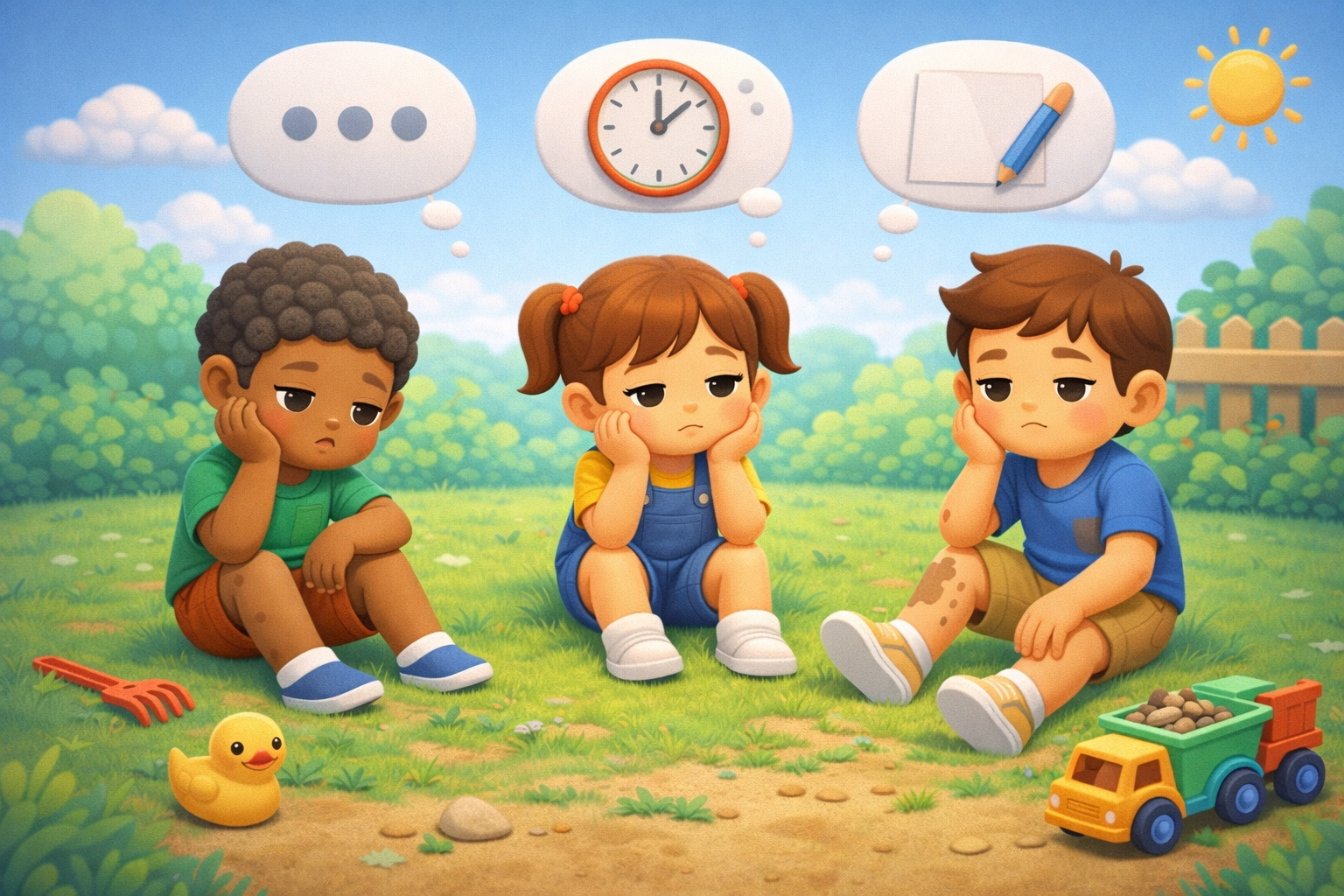
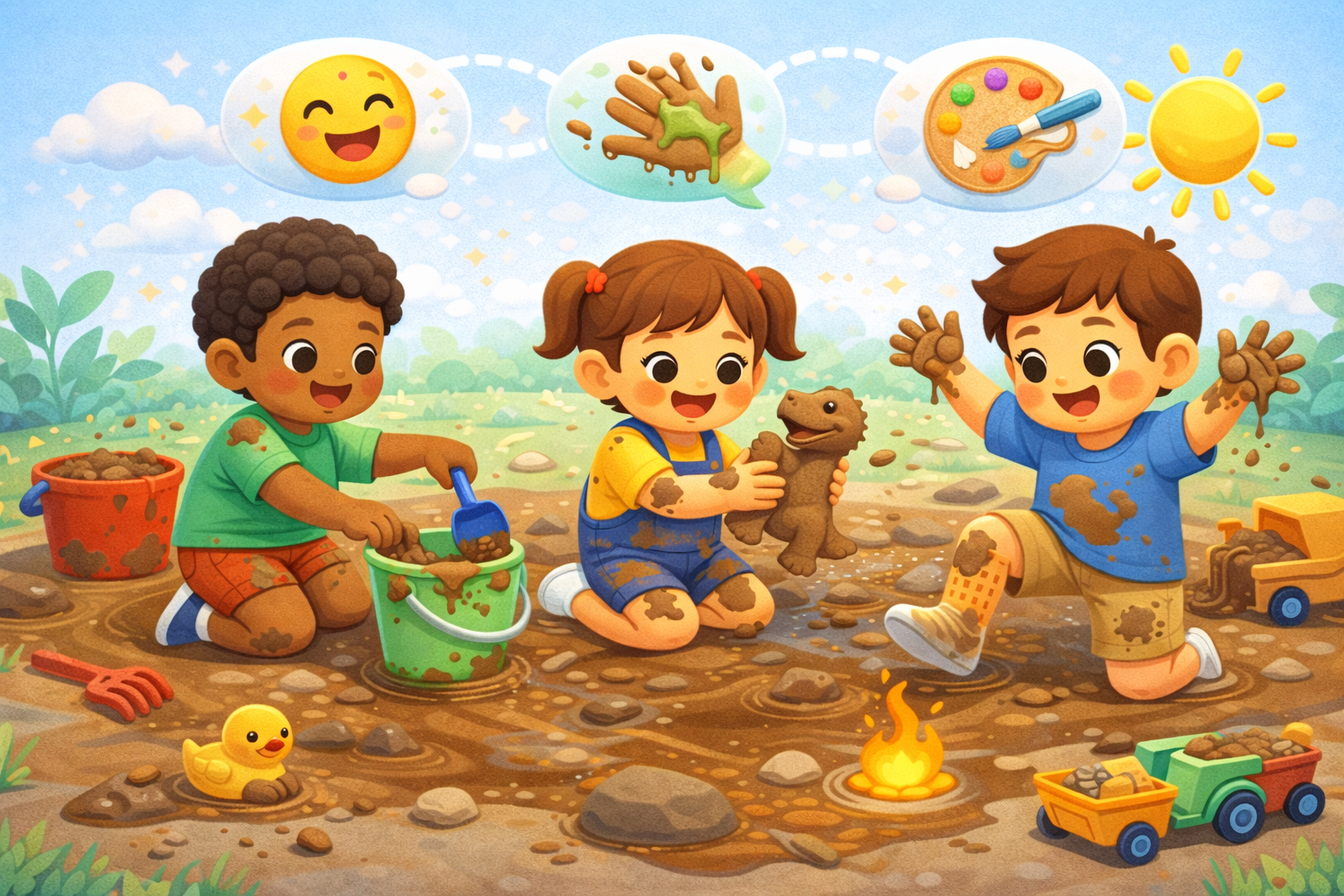
Open-ended toys have a learning curve. If a child is used to flashing, singing toys, they might look at a pile of blocks and say, “I’m bored.” Let them be bored. Boredom is the gateway to creativity. Wait it out. Eventually, they will pick up a block. Then another. And suddenly, they aren’t just playing; they are engineering a city.
At Little Land, our facilities are designed to be one giant open-ended toy. We provide the structures; your child provides the story.