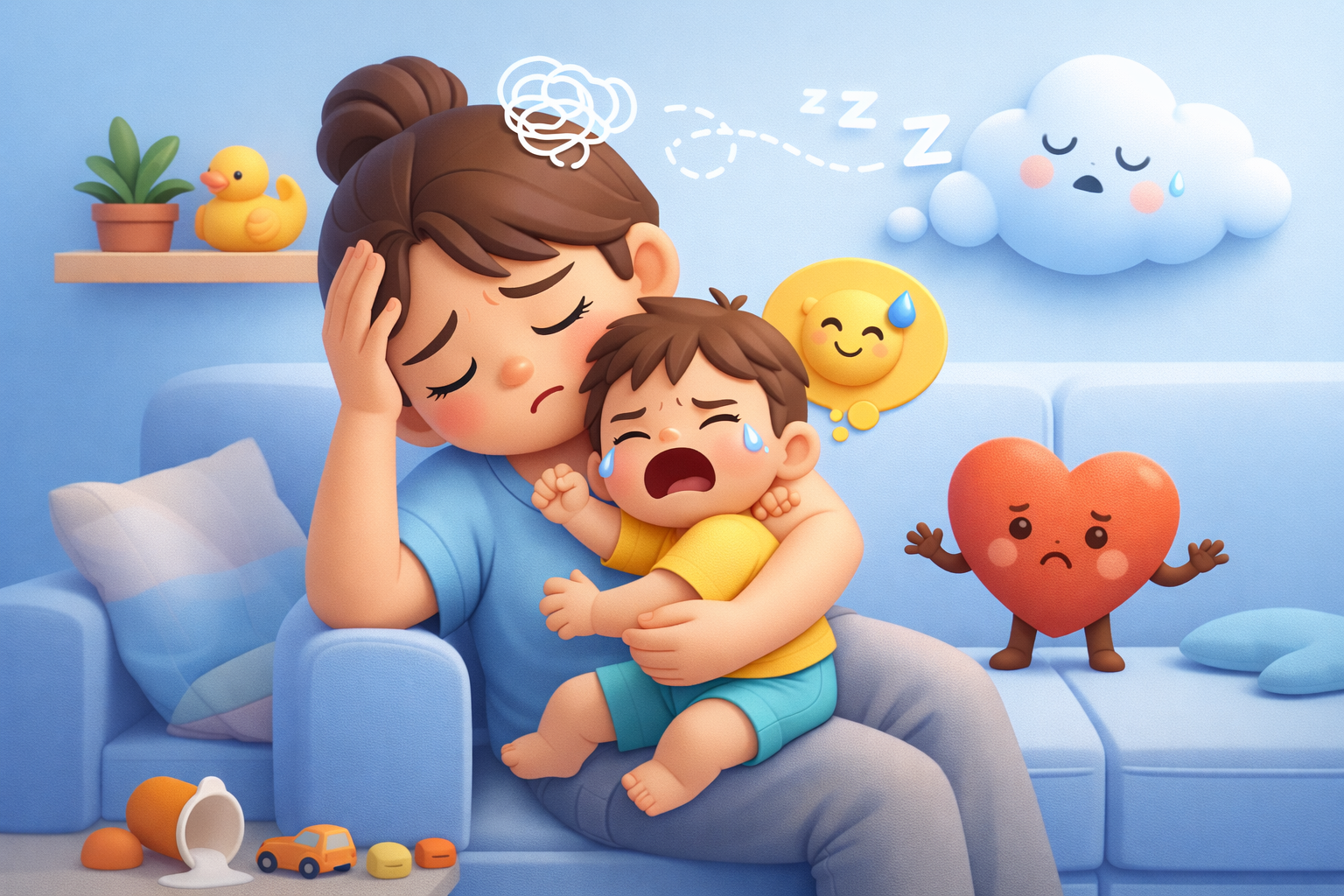

It usually happens in the living room. Dad is on the floor. The kids are jumping on him. There is screaming, laughing, and flailing limbs. Then, from the kitchen, Mom yells: “Stop it! Someone is going to get hurt! No fighting!”
It is a natural instinct. To an observer, Rough-and-Tumble Play looks a lot like aggression. It looks like chaos. But researchers (and occupational therapists) will tell you that this type of play, wrestling, chasing, tumbling, is not just fun; it is evolutionarily essential for a child’s development.
Table of Contents
What is Rough-and-Tumble Play?
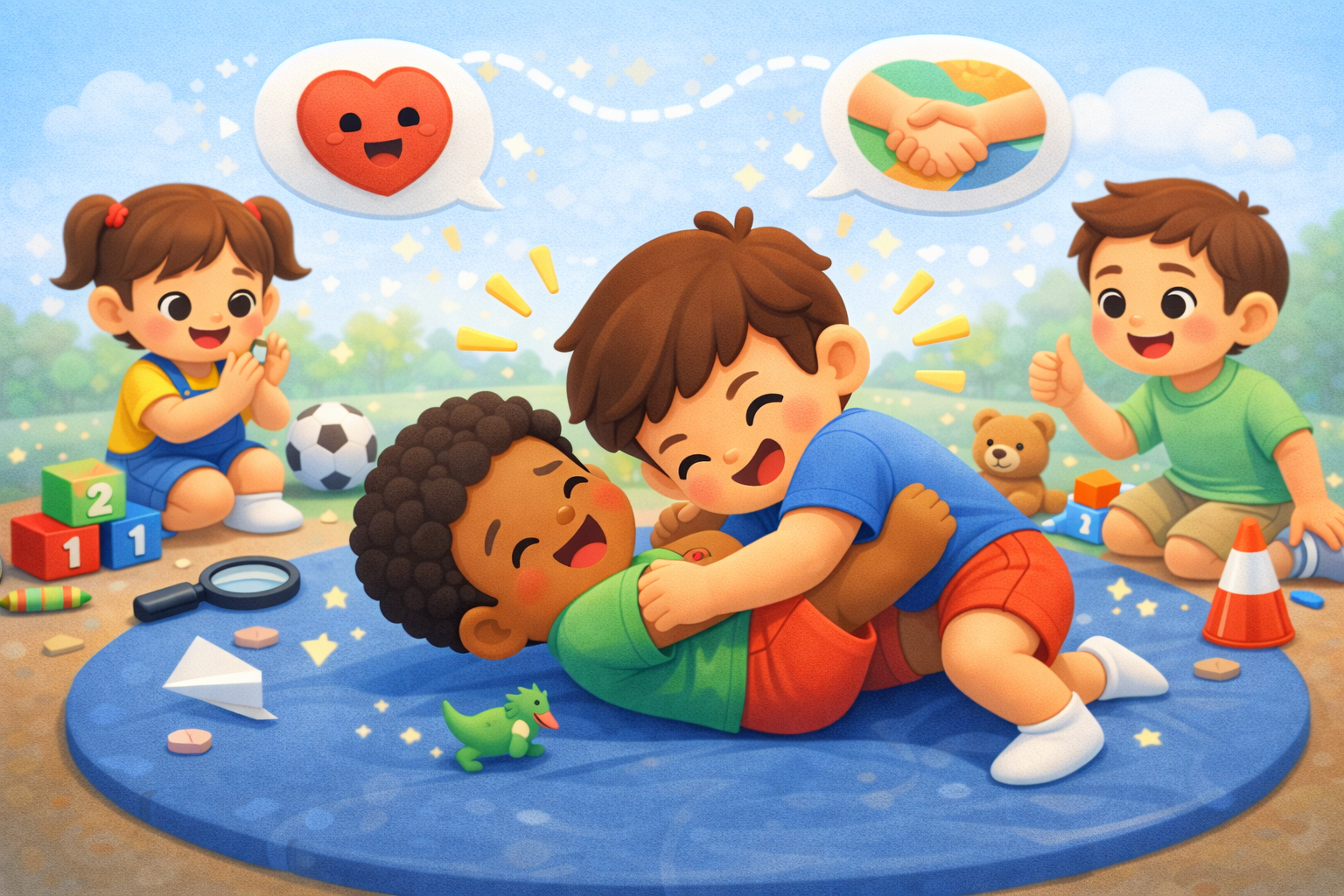
It is a form of social play that involves high physical activity. It is distinct from real fighting.
- The “Play Face”: Kids are smiling or laughing.
- Self-Handicapping: The stronger person (usually the parent or older sibling) holds back their strength to let the little one win sometimes.
- Turn-Taking: First I chase you, then you chase me.
Benefit 1: Learning Ethics and Empathy
How does a child learn that hurting people is bad? Paradoxically, by getting close to hurting them. In a wrestling match, a child might accidentally pinch too hard. The play partner says, “Ouch! That hurt. Stop.” The game stops. The fun ends. The child learns a powerful lesson: “If I am too rough, people won’t play with me.” They learn to regulate their force. They learn to read facial expressions. This builds empathy. A child who never engages in rough play may actually have more trouble understanding physical boundaries because they have never tested them in a safe setting.
Benefit 2: Emotional Regulation
Rough play produces a massive spike in adrenaline. The heart beats fast, the voice gets loud. But to keep the game going, the child has to control that adrenaline. They have to navigate the line between “excitement” and “anger.” Practicing this transition, going from 100 to 0, is the definition of emotional regulation.
Benefit 3: The “Dad” Connection
While moms certainly wrestle too, research shows that fathers (or father figures) engage in rough-and-tumble play more often. For many children, this is their primary “love language” with their dad. It is physical bonding. It builds trust. “I can trust this big, strong person not to crush me, even though he could.” That feeling of safety is profound.
How to Keep It Safe
While we encourage rough play, we do need rules to keep it from turning into tears.
- The “Stop” Rule: If anyone says “Stop” (or a code word like “Red Light”), the game ends immediately. No exceptions. This teaches consent.
- No High-Risk Zones: No wrestling near the glass coffee table or on the stairs. (This is why soft play gyms like Little Land are ideal, padded floors mean maximum fun with minimum risk).
- Watch the Face: Teach your child to look at their partner. “Is he smiling? No? Then he isn’t having fun anymore. Back off.”
Red Flags: When to Intervene
You should step in if:
- The smiles disappear and turn into frowns or grimaces.
- One child is dominating and never letting the other win.
- There is intent to harm (biting, scratching, hitting with objects).
Conclusion
So, the next time the living room turns into a WWE ring, resist the urge to shut it down immediately. Take a breath. Check for smiles. If they are laughing, let them wrestle. They aren’t just making a mess; they are learning how to be decent, controlled, and empathetic human beings.