
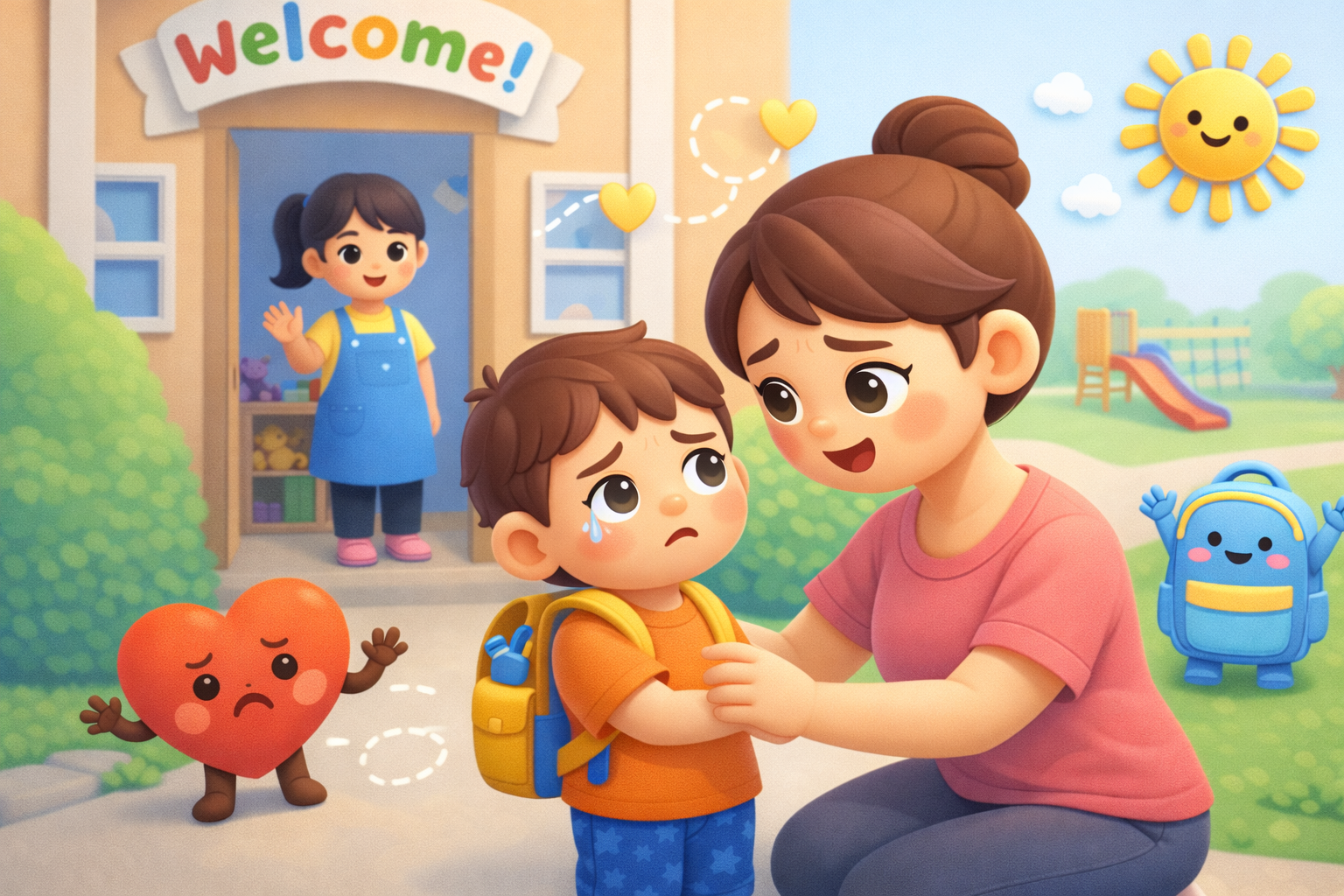
Separation Anxiety: Preparing Your Child (and Yourself) for Preschool Drop-Offs

The peeling of tiny fingers off your leg. The tear-streaked face. The wail of “Don’t leave me!” that echoes down the hallway as you walk away.
Preschool drop-off separation anxiety is one of the most heart-wrenching experiences for a parent. It triggers our biological instinct to protect our young. You might spend the rest of your workday feeling guilty, wondering if you are traumatizing them.
Here is the truth: Separation anxiety is normal. It is a sign of a healthy attachment. Your child loves you and feels safe with you, so naturally, they protest when you leave. But that doesn’t make it easier. Here is how to handle the transition with confidence.
1. The “Sneak Out” Mistake
Neve, ever sneak out while your child is distracted. You might think you are saving them tears, but you are actually breaking trust. If you vanish, the child learns that you might disappear at any moment. This creates hyper-vigilance, they won’t let you out of their sight next time. Always say goodbye, even if it causes tears.
2. Keep It Short and Sweet
The “Long Goodbye” is a trap. The longer you stay, hug, and negotiate, the more you validate their fear that something is wrong. Create a quick ritual:
- Give a hug.
- Give a “kiss in the palm” (The Kissing Hand method).
- Say your phrase: “Mommy always comes back.”
- Leave. Once you say you are leaving, you must leave. If you hesitate or come back because they are crying, you teach them that crying works to keep you there.
3. Bridge the Separation
Anxiety comes from the unknown. “When will I see you again?” Toddlers don’t understand “at 3:00 PM.” They understand events.
- Don’t say: “I’ll be back later.”
- Do say: “I will pick you up after snack time.” Give them something to look forward to: “When I pick you up, we will go to the park/read your favorite book.” This “bridges” the gap between goodbye and hello.
4. Manage Your Own Emotions
Children are emotional sponges. If you are anxious, teary, or hesitant at the door, they will absorb that fear. They think, “Mom looks scared to leave me here. This place must be dangerous.” Fake it if you have to. Put on a big smile, project confidence, and save your own tears for the car. If you act like school is a safe, happy place, they will eventually believe you.
5. Create a “Transition Object”
Allow them to bring a small piece of home with them.
- A small family photo in their backpack.
- A “bravery stone” (a smooth rock you painted together) in their pocket.
- A matching bracelet (one for you, one for them). Touching this object gives them a sensory connection to you when they feel lonely.
The “Reunion” Matters
When you pick them up, put your phone away. Get on their level. Open your arms. Let them know that you are delighted to see them. This reinforces the cycle: You leave, you return, and everything is okay.
Most teachers will tell you that the child stops crying within 5 minutes of the parent leaving. The anticipation is often worse than the reality. Hang in there. You are building their resilience and independence, one drop-off at a time.
 English
  Español de República Dominicana