
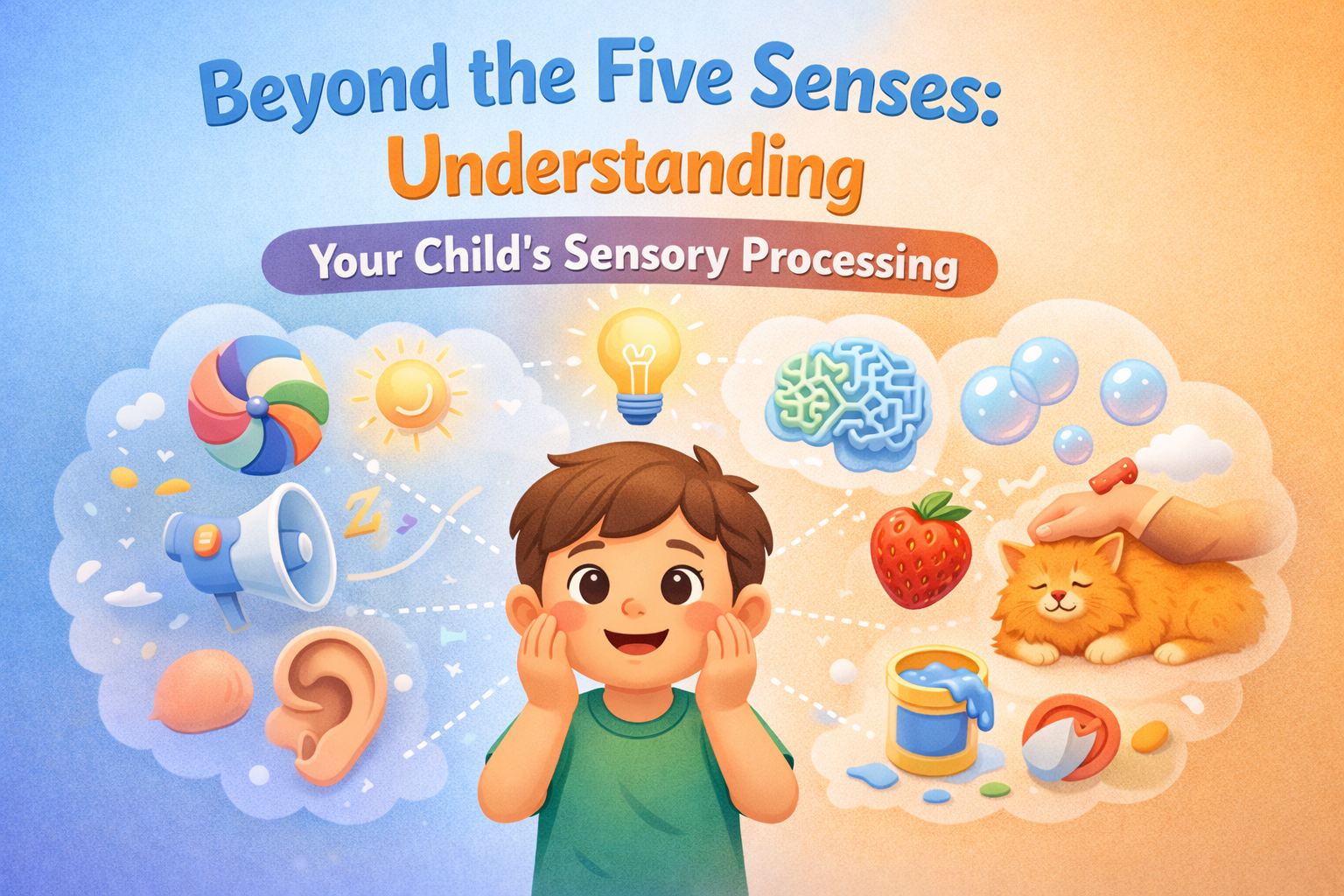

We all learned about the five basic senses in kindergarten: sight, smell, taste, touch, and hearing. These senses help us navigate the world, enjoy our food, and listen to music. However, for parents seeking to understand their child’s development, especially when it comes to coordination, focus, and emotional regulation, there are two “hidden” senses that are just as critical.
At Little Land, our pediatric therapists often work with children to develop these hidden senses: the Vestibular system and the Proprioceptive system. Understanding these can be the key to unlocking why your child seeks constant movement or, conversely, seems afraid to lift their feet off the ground.
Table of Contents
The Vestibular System: The Sense of Balance
Located in the inner ear, the vestibular system is our body’s GPS. It tells us where our head is in space, whether we are moving or standing still, and how fast we are going. It is the foundation of balance and coordination.
When a child has a well-developed vestibular system, they feel secure exploring their environment. However, when this system is under-developed or over-sensitive, you might notice specific behaviors:
- The “Seeker”: This child can spin in circles for minutes without getting dizzy. They crave intense movement, love swinging high, and can’t seem to sit still. Their body is “under-responsive” to input, so they need more intensity to feel regulated.
- The “Avoider”: This child might be terrified of lifting their feet off the ground. They may dislike swings, get car sick easily, or appear “clumsy” because they feel insecure about their balance.
Proprioception: The Sense of Body Awareness
If the vestibular system is the GPS, proprioception is the internal map of body parts. It involves receptors in our muscles and joints that tell the brain where our limbs are without us having to look at them. This sense allows you to touch your nose with your eyes closed or hold a paper cup without crushing it.
Signs of proprioceptive struggles in children include:
- Too much force: Constantly breaking crayons, slamming doors, or playing too roughly with other kids (not out of aggression, but a lack of force modulation).
- The “Crasher”: Kids who love to jump off couches, crash into pillows, or enjoy tight bear hugs are often seeking “deep pressure” input to calm their nervous systems.
- Poor coordination: Difficulty maneuvering buttons, zippers, or holding a pencil correctly.
Why “Sensory Play” Matters
You might hear the term “Sensory Play” and think of messy sand tables or water bins. While those are excellent for tactile senses, a comprehensive sensory diet includes full-body movement. This is why facilities like Little Land are designed with specific equipment.
For example, a therapy swing isn’t just a fun ride; it is a tool to stimulate the vestibular system. A rock climbing wall isn’t just for exercise; it requires the child to use proprioception to plan their route and pull their body weight up.
How to Support Your Child’s Sensory Needs
If you notice your child has specific sensory quirks, don’t panic. Sensory processing is a spectrum, and we all have preferences. However, if these issues interfere with daily life, such as an inability to focus in school or severe distress during grooming activities like hair cutting, it might be time to consult a pediatric occupational therapist.
In the meantime, encourage “heavy work” and active play:
- For the High-Energy Child: Let them carry heavy grocery bags, push a laundry basket, or do “wheelbarrow walks” to provide calming deep pressure to their joints.
- For the Cautious Child: Introduce movement slowly. Start with low swings where their feet can touch the ground, or balance beams that are just inches off the floor.
By understanding that behavior is often a form of communication about sensory needs, we can stop labeling children as “wild” or “clumsy” and start giving them the tools they need to regulate their bodies and thrive.
 English
  Español de República Dominicana