
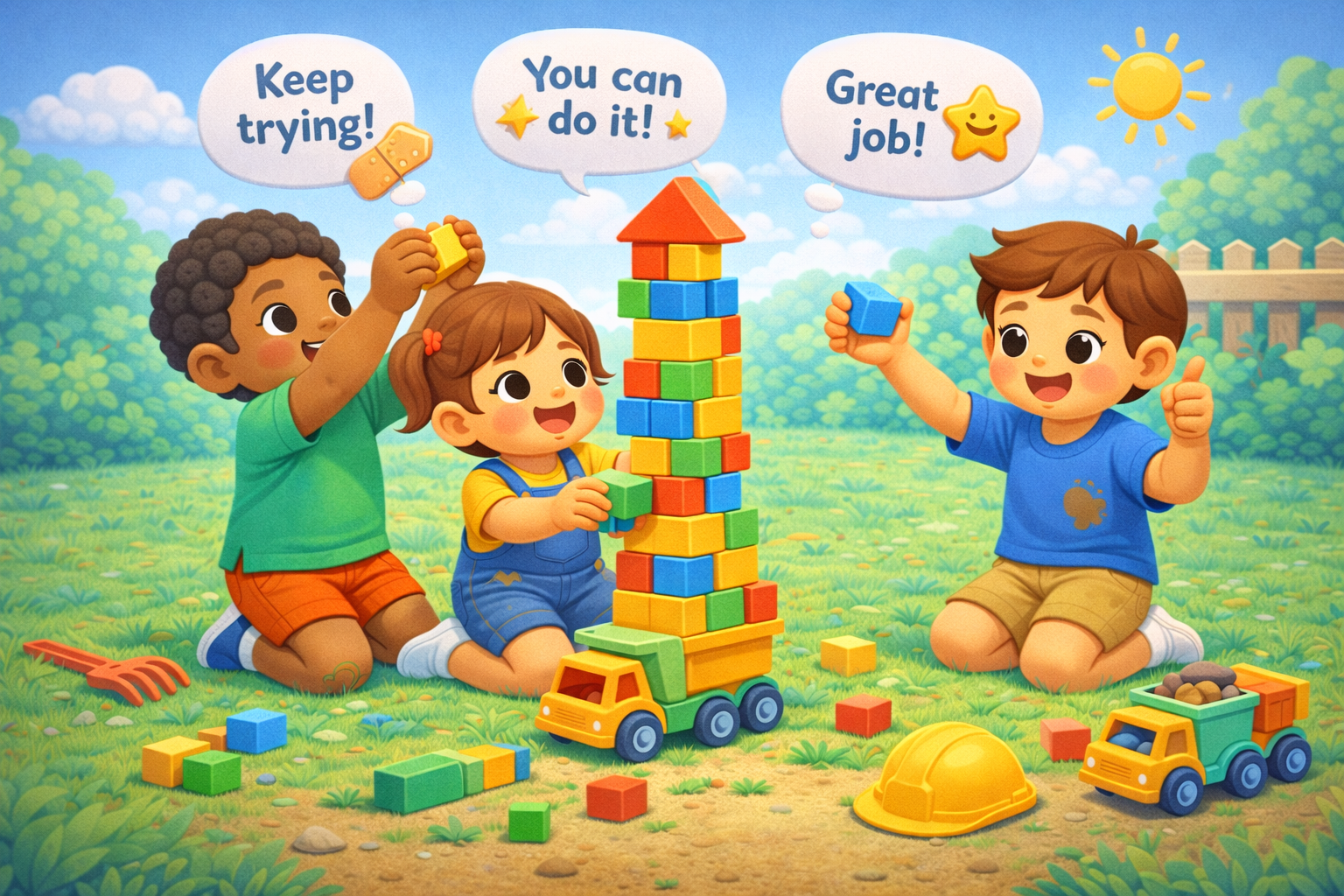

It is a scene that plays out in living rooms and at Little Land every day. A child spends 20 minutes carefully stacking wooden blocks. The tower gets higher and higher. They hold their breath. They place the final block on top. And then… CRASH. Gravity wins. The tower collapses into a heap.
Table of Contents
What happens next is a pivotal moment in your child’s emotional development. Do they scream and throw the blocks? Do they cry and give up? Or do they take a deep breath and start again?
This is Construction Play, and it teaches something far more valuable than architecture. It teaches Resilience (often called “Grit”).
The Physics of Failure
Blocks are unforgiving. If you don’t build a wide base, the tower falls. If you aren’t steady, it topples. Unlike a video game where you can restart with a cheat code, blocks obey the laws of physics. This provides immediate, honest feedback.
- “My plan didn’t work.”
- “I need to try a different way.” This trial-and-error process is the scientific method in action.
Building the “Growth Mindset”
Carol Dweck’s research on “Growth Mindset” highlights the difference between:
- Fixed Mindset: “I’m bad at building. I quit.”
- Growth Mindset: “I haven’t figured out how to make it stand up YET.”
Construction play naturally encourages the Growth Mindset because the stakes are low. The tower fell, but nobody got hurt. It is a safe place to fail. When a child rebuilds a fallen tower, they are literally practicing perseverance. They are learning that failure is not the end; it is just data for the next attempt.
How to Support Construction Play
1. Don’t Fix It for Them If the tower falls and they cry, don’t rush to rebuild it for them. Validate the frustration: “Oh no! It crashed! You worked so hard on that. It is frustrating when things break.” Then, encourage the retry: “I wonder if we can make the bottom part wider this time?”
2. Focus on the Process, Not the Product Don’t just praise the high tower. Praise the effort. “I saw how steady your hand was.” “I noticed you used the rectangle blocks for the base. Good thinking.”
3. Add “Loose Parts” Combine blocks with other toys. Add toy cars, plastic animals, or pieces of fabric. Suddenly, the blocks aren’t just a tower; they are a zoo, a garage, or a castle. This adds a layer of narrative imagination to the structural engineering.
At Little Land, our giant foam blocks allow kids to build structures bigger than themselves. The crash is louder, the effort is bigger, and the lesson in resilience is even stronger.
 English
  Español de República Dominicana