
Let’s be honest: Most parents hate mess. We see a child covered in mud, paint, or spaghetti sauce, and our blood pressure rises. We see laundry. We see scrubbing. We see germs. Our instinct is to wipe their face immediately. To say, “Don’t touch that, it’s yucky.”
Table of Contents
But in our quest for cleanliness, we might be accidentally depriving our children of a critical nutrient for their brain: Tactile Stimulation.
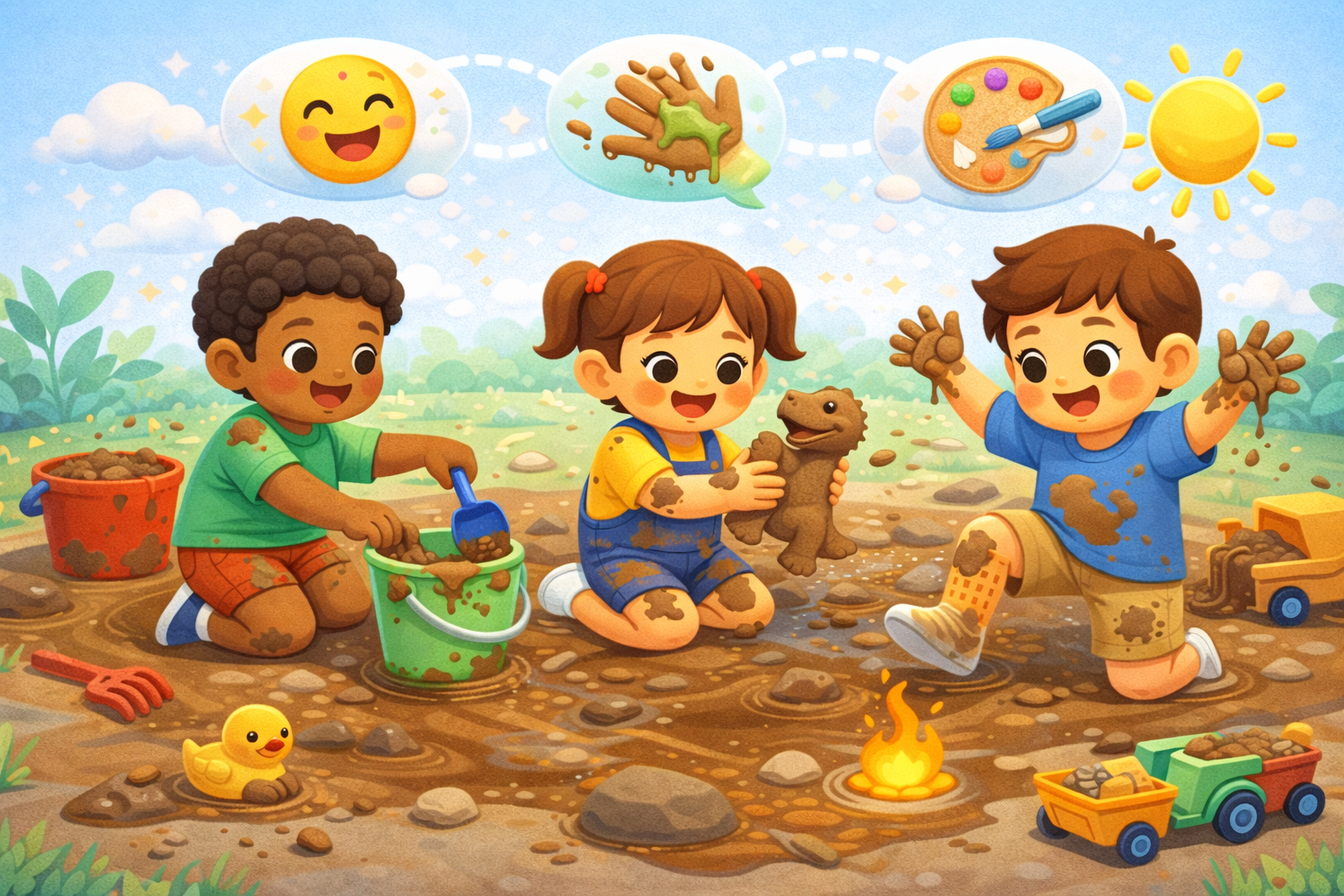
Messy Play (or sensory play) is the open-ended exploration of materials like mud, sand, slime, paint, water, or foam. And for a developing brain, it is absolutely essential.
The Skin: Our Largest Organ
The skin is the largest sensory organ in the body. For babies and toddlers, touch is the primary way they learn about the world.
- Is it wet or dry?
- Is it rough or smooth?
- Is it warm or cold?
- Does it squish or crumble?
When a child plunges their hands into a bucket of slime, their brain is receiving millions of electrical signals. This builds new neural pathways.
Desensitization (The “Picky Eater” Connection)
Have you ever met a child who freaks out if they get a speck of dirt on their hands? Or a child who gags at the texture of mashed potatoes? This is often Tactile Defensiveness. Their brain interprets harmless touch sensations as “danger.” The cure? Messy Play. By gradually exposing a child to different textures in a safe, playful way, we “desensitize” their nervous system. A child who learns to tolerate sticky glue on their fingers is more likely to tolerate “slimy” foods like peaches or yogurt in their mouth. The hand and the mouth are closely connected in the brain.
Fine Motor Strength
Squishing wet sand, squeezing a sponge, or pinching clay requires muscle strength. Messy play is the gym for fingers. Writing requires a strong grip. Before a child can hold a pencil, they need to have poked, prodded, and squeezed their way through the sensory world.
Tips for Parents Who Hate Mess
If the idea of glitter in your carpet makes you want to cry, you don’t have to turn your living room into a swamp.
- Take it Outside: Mud kitchens and water tables belong in the backyard. Hose them down when done.
- The Bathtub Method: Let them paint with shaving cream on the shower walls. When they are done, turn on the shower. Instant clean child, instant clean walls.
- Ziplock Bag Painting: Put paint inside a sealed bag. Tape it to the window. The child can squish the colors around without getting a drop on themselves.
- Visit Little Land: This is the ultimate hack. We have sensory stations, sand play, and creative zones designed for mess. Your child gets all the developmental benefits, and we handle the cleanup.
Reframing the “Yuck”
Next time your child finds a mud puddle, pause. Instead of rushing to clean them, watch them. Watch the concentration on their face as they watch the mud drip. Watch the joy as they stomp. Dirt washes off. But the sensory lessons they learn will stay with them forever.
 English
  Español de República Dominicana