
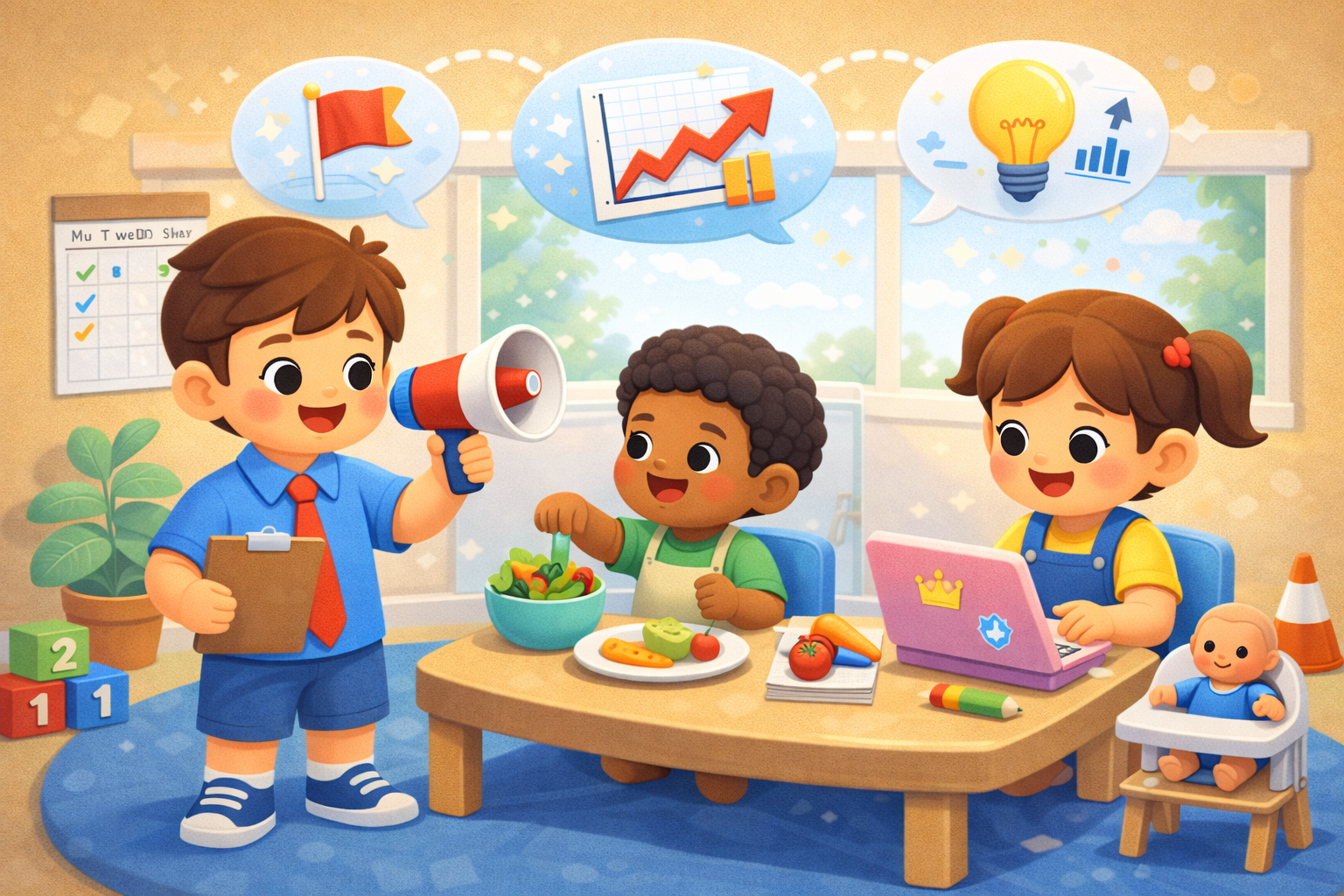

Watch a group of preschoolers playing “House” or “Restaurant,” and you might just see cute kids in oversized aprons serving plastic pizza. But if you listen closely, really closely, you will hear something else. “No, you can’t be the baby, you were the baby last time!” “We need more plates! The customers are waiting!” “If the soup is hot, we have to blow on it first.”
Table of Contents
You are witnessing a masterclass in management. Psychologists call this Sociodramatic Play, and it is widely considered the highest form of social play. Far from being a waste of time, pretending is the training ground for the soft skills that make great leaders: empathy, negotiation, and complex planning.
1. The Art of Negotiation
Before the game even starts, the children must agree on a “script.”
- Who is the mom?
- Who is the dog?
- Is the house a castle or a spaceship? This requires high-level negotiation. If one child is too bossy, the other kids will quit. If one child is too passive, they get stuck being the “dog” every time. To keep the game going, they must learn to compromise. “Okay, you be the Elsa today, but I get to be Elsa tomorrow.” This is conflict resolution 101.
2. Empathy: The Ability to Step into Another’s Shoes
To pretend to be someone else, a child must imagine how that person feels. If a child is playing the “Doctor,” they must act caring. If they are playing the “Patient,” they must act sick. This mental leap, stepping out of their own ego and into another perspective, is the foundation of Theory of Mind. It is the realization that other people have thoughts and feelings different from my own. A leader without empathy is a dictator. Pretend play builds the compassionate leader.
3. Impulse Control (Executive Function)
Lev Vygotsky, a famous psychologist, noted that children actually have better self-control when playing pretend than when acting normally. Why? Because the role demands it. A child who usually runs around screaming might sit perfectly still for 10 minutes because he is playing the role of a “guard dog.” He is inhibiting his impulses to stay in character. He is practicing self-regulation.
4. Abstract Thinking
When a child holds a banana and pretends it is a telephone, they are engaging in Symbolic Representation. They are detaching the meaning of the object from the object itself. Real object: Banana. Symbol: Phone. This ability to use symbols is the precursor to reading and math. After all, the letter “A” is just a symbol for a sound. The number “5” is just a symbol for a quantity. “Phone-banana” play prepares the brain for literacy.
How to Support Pretend Play
- Provide Props, Not Scripts: You don’t need expensive “play sets.” Old scarves, hats, cardboard boxes, and kitchen utensils are better because they are open-ended.
- Be a Supporting Actor: If your child hands you a cup of invisible tea, drink it. Slurp it loudly. Say it’s hot. Validate their reality.
- Don’t Take Over: Let them direct the scene. If they say the tea is actually poison, well… then you have to pretend to faint!
So, the next time your living room is turned into a chaotic “veterinary clinic” for stuffed animals, don’t worry about the mess. You are raising a CEO, a diplomat, or a creative director.
 English
  Español de República Dominicana