
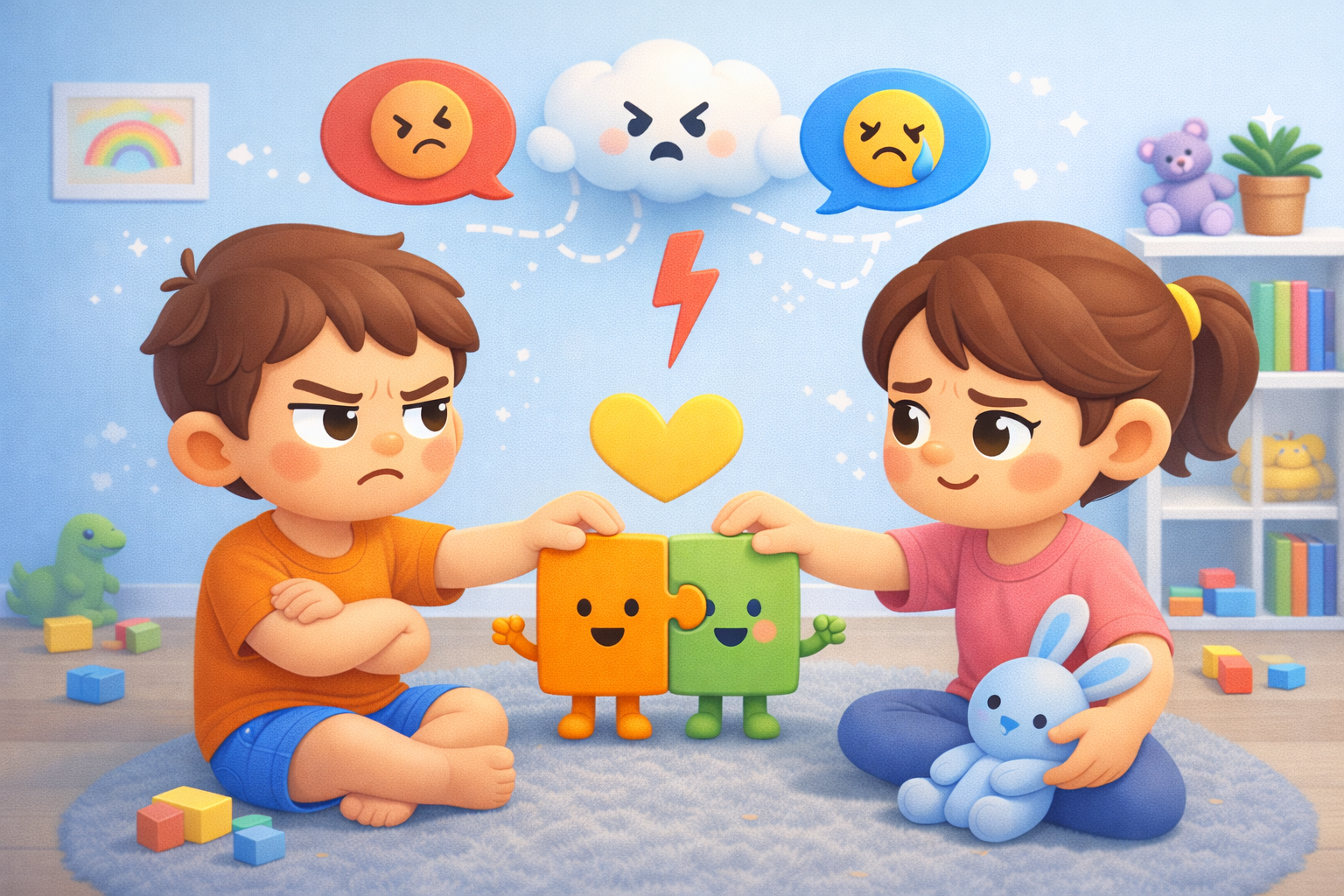

- “He’s touching me!”*
- “She took my truck!”*
- “I had it first!”*
If you have more than one child, you know that sibling rivalry is loud, exhausting, and inevitable. It can turn a peaceful Sunday morning into a wrestling match. Parents often feel like referees, constantly blowing the whistle and handing out penalties.
But what if we shifted our perspective? Sibling conflict is not a failure of parenting. It is a social skills laboratory. The sibling relationship is the first place a child learns how to negotiate, share, assert boundaries, and forgive. It is a safe space to test limits.
However, how we handle the fighting determines whether they learn these skills or just become more resentful.
Table of Contents
1. Stop Being the Judge
When we rush in and ask, “Who started it?”, we are doomed.
- The kids immediately switch into “lawyer mode,” defending their case and lying.
- One child becomes the “Victim” and the other the “Bully.” These labels can stick for life.
- The “Victim” learns to cry to get the sibling in trouble. The “Bully” feels misunderstood and targets the sibling later in secret.
Try this instead: Treat them as a team with a shared problem. “I see two kids who are upset and one red truck. We are going to put the truck away until you two can agree on a plan.”
2. The “Sportscasting” Technique
When the conflict is mild, don’t intervene with solutions. Just narrate what you see (like a sportscaster). “You both want the blue block. Leo has it. Sarah is trying to take it. Sarah is crying.” State the facts without judgment. Often, hearing the situation described calmly helps kids lower their defenses and figure it out themselves. “I’m not going to solve this for you, but I will stay here to keep everyone safe while you figure it out.”
3. Focus on the Aggressor’s Needs, Not Just the Victim
Usually, we comfort the crying child and send the hitter to timeout. But aggression is often a sign of dysregulation. The hitting child is overwhelmed.
- Stop the violence immediately: “I won’t let you hit. Hitting hurts.”
- Check the victim briefly: “Are you okay?”
- Then, help the aggressor regulate: They might need a “time-in” (connection) rather than a “time-out” (isolation). Once they are calm, then discuss what happened.
4. Special Time (The Antidote)
The root of most sibling rivalry is competition for the most limited resource: You. Kids fight to get your attention, even if it’s negative attention. The cure is proactive One-on-One Time. Ten minutes a day of undivided attention with each child (no phone, no sibling allowed) fills their emotional cup. When their cup is full, they don’t need to tackle their brother to get you to look at them.
5. Teach “Repair”
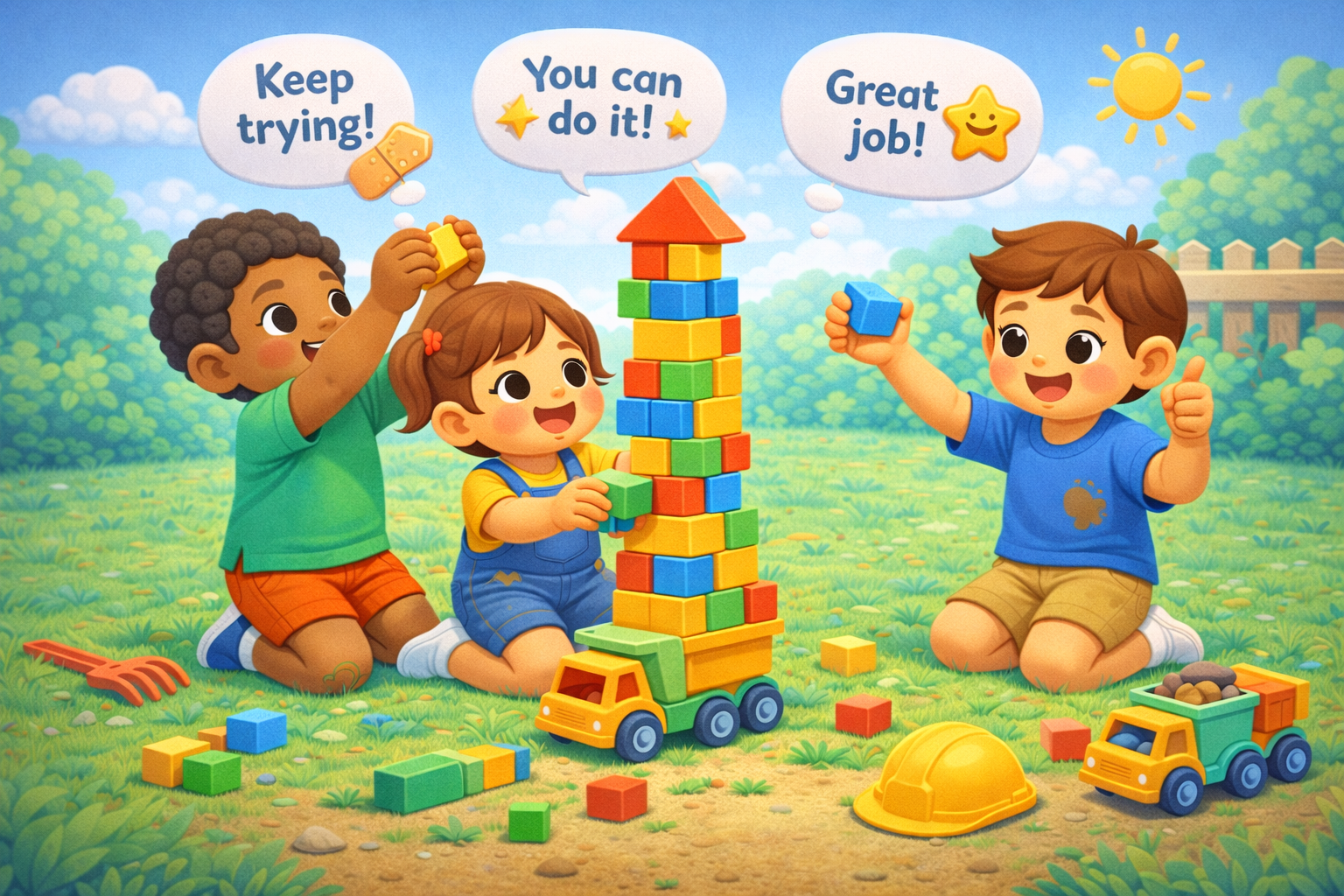
Forcing a child to say “I’m sorry” often leads to a robotic, insincere apology. Teach Restitution instead. “You knocked down his tower and that made him sad. What can you do to help him feel better?”
- Help rebuild the tower.
- Get him an ice pack.
- Draw him a picture. Action speaks louder than words.
Sibling rivalry will never disappear completely. But by stepping out of the referee role and into the mediator role, you can help your children build a relationship that will, eventually, become the longest and strongest friendship of their lives.
 English
  Español de República Dominicana