
If you have a child who seems to bounce off the walls, crashes into furniture on purpose, or plays too roughly with siblings, your instinct might be to tell them to “sit still and calm down.”
But what if I told you that sitting still is actually the hardest thing for their body to do? And that the secret to calming them down is actually more movement, not less?
Welcome to the concept of “Heavy Work.”
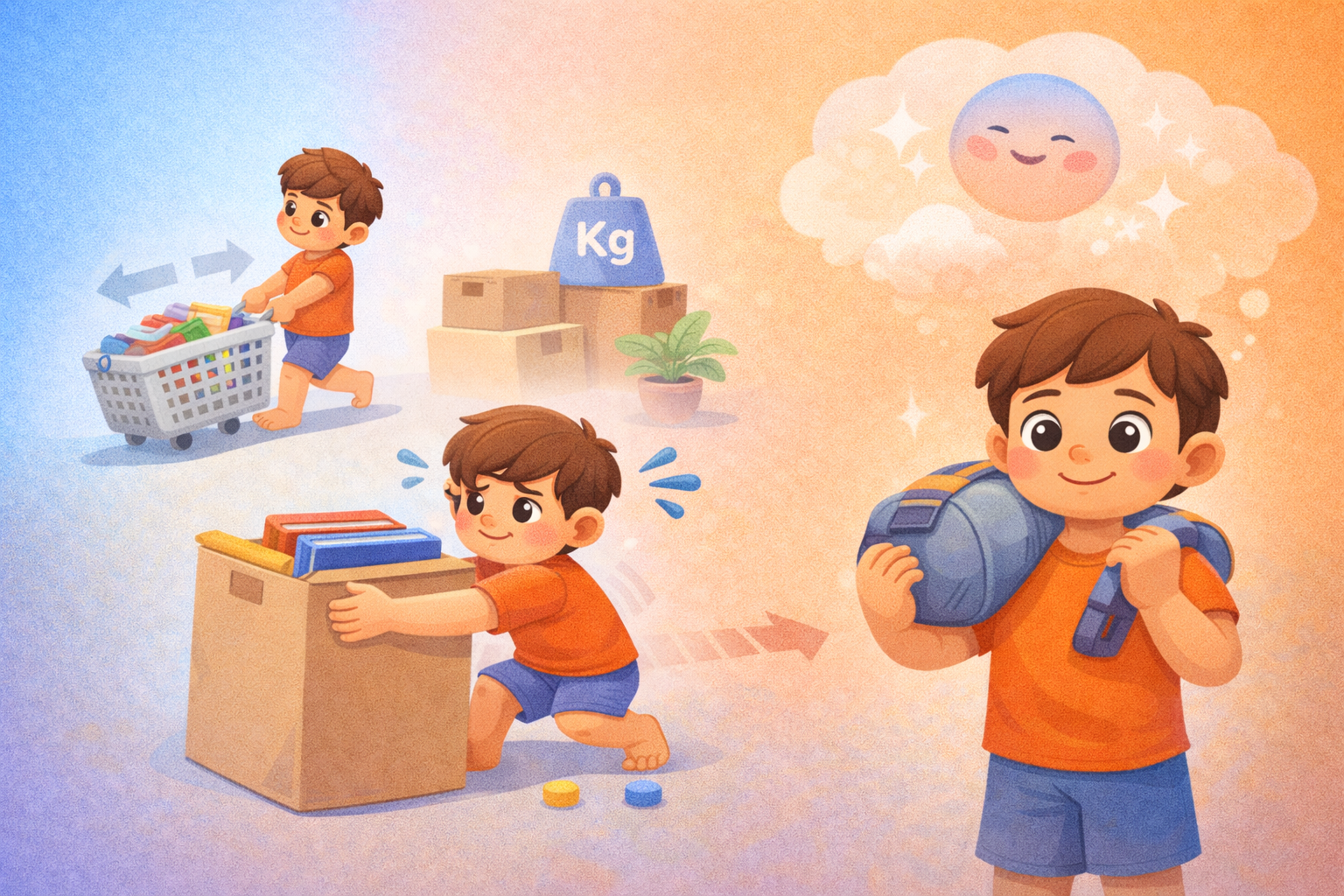
In the world of pediatric occupational therapy, Heavy Work is a magic wand. It doesn’t mean sending your child to a construction site. It refers to any activity that pushes or pulls against the body, creating resistance. This resistance activates the Proprioceptive System, and that is the key to a calm, happy child.
Table of Contents
The Science: Why Does It Calm Them Down?
Proprioception is our sense of body awareness. It tells us where our limbs are in space. The receptors for this sense are located in our muscles and joints.
When a child feels overwhelmed, anxious, or over-stimulated (sensory overload), their nervous system is chaotic. Providing intense input to their muscles and joints (via pushing, pulling, or lifting) releases calming chemicals like serotonin and dopamine in the brain. Think of it like a tight hug or a weighted blanket. It “organizes” the brain.
- For the high-energy child: Heavy work burns off that buzzing energy and grounds them.
- For the lethargic/tired child: Heavy work wakes up their muscles and alerts the brain.
Signs Your Child Needs Heavy Work
Your child might actually be asking for heavy work through their behavior without realizing it:
- They love crashing into pillows or mattresses.
- They chew on their shirt collars or pencils (seeking input through the jaw).
- They stomp their feet when walking.
- They enjoy being squeezed tight or burying themselves under blankets.
Easy Heavy Work Activities for Home
You can incorporate these into daily chores or play. The beauty of heavy work is that it often looks like “helping.”
1. The “Groceries” Workout Don’t carry all the bags yourself. Give your child the bag with the heavy milk carton or cans (ensure it is not too heavy to cause injury, but heavy enough to require effort). Ask them to carry it to the kitchen. The strain on their arms is instantly regulating.
2. Wall Push-Ups If a child is getting rowdy in line or while waiting, have them face a wall. Place palms flat against the wall and push as hard as they can for 10 seconds. It’s invisible therapy.
3. Animal Walks Make it a game.
- Crab Walk: Walking on hands and feet with tummy facing up.
- Bear Walk: Walking on hands and feet with tummy facing down.
- Frog Jumps: Squatting low and jumping high. These use their own body weight as resistance.
4. The “Burrito” Roll Lay a blanket on the floor. Have your child lie at the edge. Roll them up tightly (keeping their head free) like a burrito. Then, pretend to put “toppings” on them by firmly pressing or massaging their arms and legs. Most kids giggle and relax immediately.
5. Drinking Thick Liquids Sucking thick liquid (like a smoothie or applesauce) through a thin straw requires strong mouth muscles. This oral heavy work is very soothing for anxiety.
How Little Land Uses Heavy Work
Our indoor play gym is essentially a heavy work paradise.
- The Rock Wall: Pulling body weight up against gravity.
- The Monkey Bars: Hanging and swinging puts traction on the joints.
- Foam Pits: wading through foam blocks provides constant resistance against the legs.
Next time your child is having a meltdown or seems unable to focus on homework, try a “Heavy Work Break.” Five minutes of pushing a laundry basket or doing wheelbarrow walks might just save your afternoon.
 English
  Español de República Dominicana