
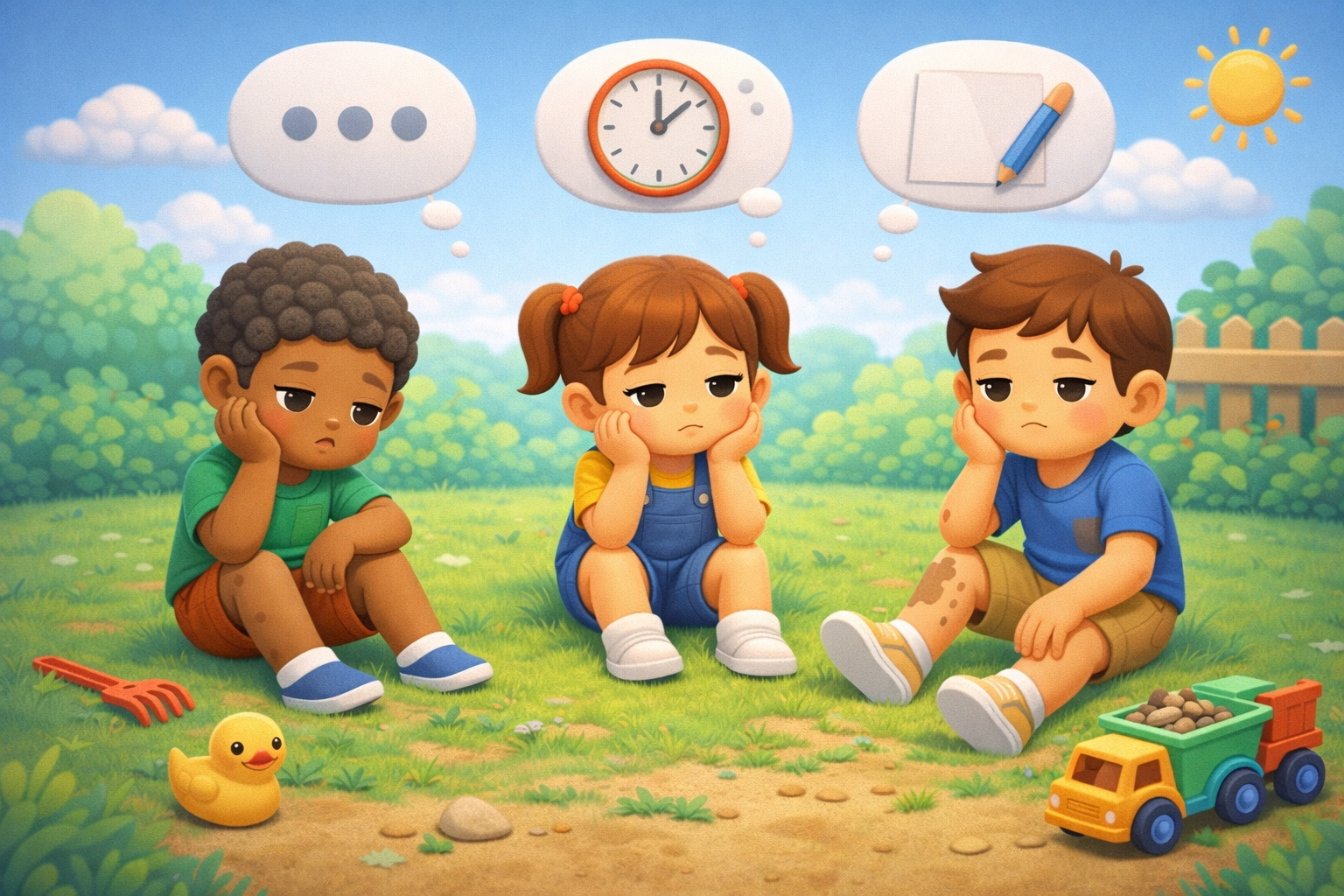

“Mom, I’m bored.” “Dad, there’s nothing to do.”
For a modern parent, these words trigger an immediate panic response. We feel guilty. We feel like we are failing. We rush to fill the silence.
- “Here, take the iPad.”
- “Let’s bake cookies!”
- “Why don’t we go to the zoo?”
Table of Contents
We act like the Cruise Director of our children’s lives, constantly scheduling entertainment, activities, and enrichment. But child psychologists and neuroscientists have a different message for you: Stop. Boredom is not a problem to be fixed. It is a vital developmental state to be embraced.
The “Default Mode Network”
When a child is focused on a task (like watching a movie or following a Lego instruction kit), their brain is in “executive mode.” But when they are bored, when they are staring at the ceiling or kicking a ball against a wall, their brain switches to the Default Mode Network (DMN).
This is the daydreaming mode. And this is where the magic happens. In the DMN, the brain consolidates memories, processes emotions, and connects disparate ideas. It is the birthplace of creativity. If we never let our children be bored, we never let them access this part of their brain. We rob them of their own imagination.
The Danger of Constant Entertainment
If a parent always solves the “boredom problem,” the child learns to rely on external validation.
- “I can’t be happy unless someone entertains me.”
- “I can’t start an activity on my own.” This creates passive teenagers and adults who lack initiative.
How to Embrace the “I’m Bored” Whine
When your child complains about boredom, don’t offer a solution. 1. Validate, Don’t Fix. Child: “I’m bored.” Parent: “Boredom is an uncomfortable feeling. It sounds like your brain is waiting for a great idea.” Then, go back to what you were doing.
2. The “Boredom Gap” There will be a gap. A painful gap of maybe 20 minutes where they whine, lay on the floor, and complain. Hold the line. Do not give in. Eventually, the brain’s need for stimulation will overcome the inertia. They will pick up a stick. They will open a book. They will start building a fort. That moment, when they cross the bridge from boredom to self-directed play, is a massive victory for their independence.
3. Strewing (The Subtle Hint) If they are truly stuck, use a technique called “Strewing.” Quietly leave interesting items out on the table without saying anything.
- A magnifying glass and a leaf.
- A pile of paper cups.
- Some masking tape. Don’t say “Go play with this.” Just leave it. Curiosity will do the rest.
So, resign from your job as the Cruise Director. You are the parent, not the entertainer. Let them be bored. It is the only way they will ever learn to be interesting.
 English
  Español de República Dominicana