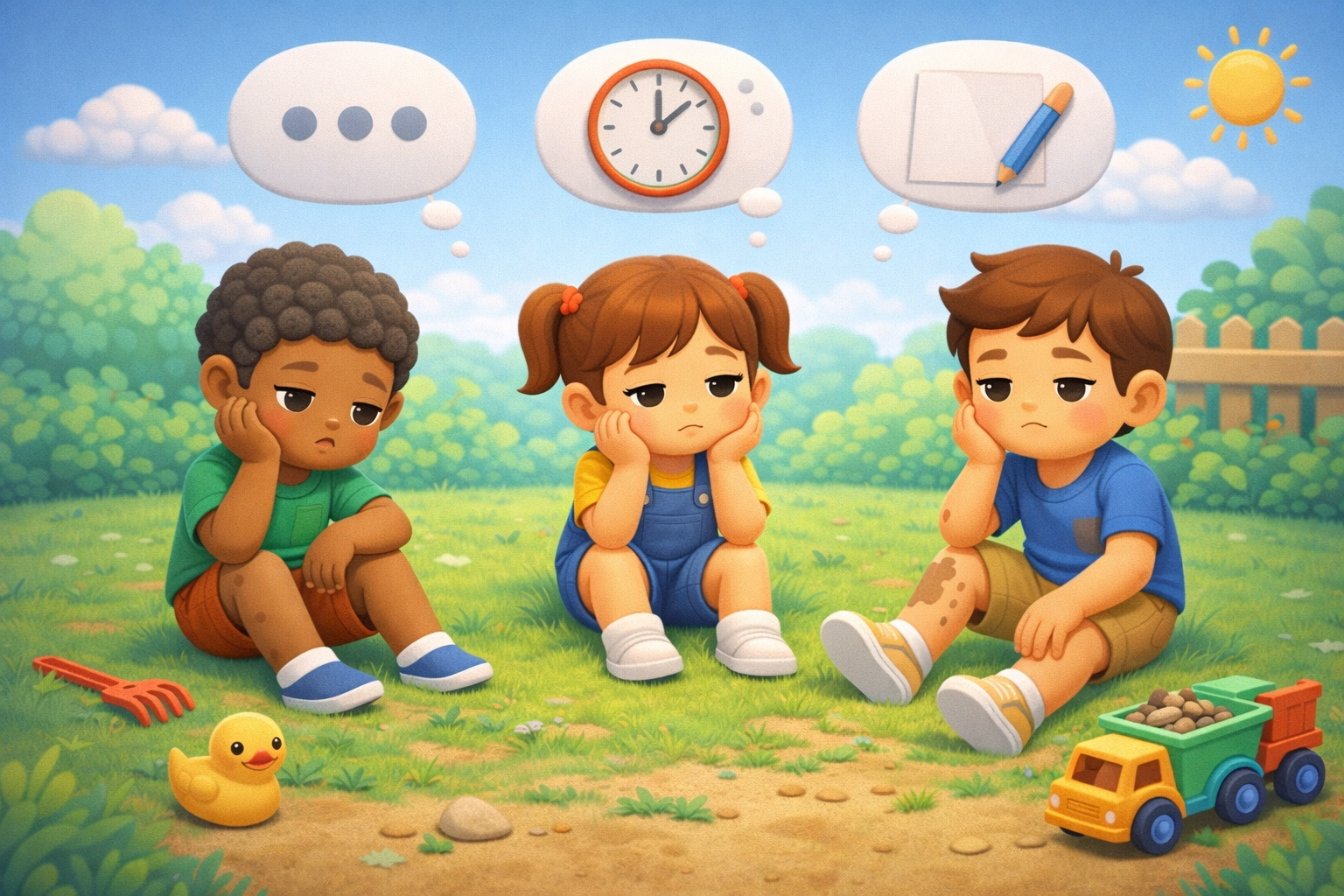

Toddler speech delay can feel overwhelming for parents, but early support makes a big difference. You’ve been waiting for it. That moment when your toddler’s babbles and coos transform into words, and then into sentences. But as you watch their peers start to chatter, a quiet worry begins to grow. Is my child’s language development on track? Should they be saying more by now? Parents facing toddler speech delay should seek early support. Toddler speech delay intervention works best when started early.
If you’re asking these questions, you are not alone. “My toddler isn’t talking” is one of the most common and anxiety-inducing concerns parents have. It’s easy to fall into a rabbit hole of online searches and comparisons with other children, which often leads to more confusion than clarity. This toddler speech delay guide helps parents take practical next steps.
This guide is here to help. As therapists, we want to provide a clear, reassuring resource that walks you through the range of what’s considered typical, helps you identify signs that might warrant a closer look, and gives you a concrete, unambiguous plan for what to do if you’re still concerned. This toddler speech delay guide helps parents take practical next steps.
Toddler Speech Delay: Understanding the Typical Range of Language Development
First, it’s important to know that language is more than just talking. It’s broken into two main categories: This toddler speech delay guide helps parents take practical next steps.
- Receptive Language: This is what your child understands. It’s their ability to follow directions, point to a picture in a book when you name it, and comprehend the words they hear.
- Expressive Language: This is what your child says. It’s their ability to use words, gestures, and signs to communicate their wants and needs.
Children almost always develop receptive language skills before expressive ones, which is why your toddler likely understands far more than they can say. While every child follows their own timeline, here are some general milestones to look for:
By 18 Months, your toddler may:
- Use gestures to communicate, like pointing or waving.
- Try to imitate sounds they hear.
- Have a vocabulary of around 20 words.
- Follow simple, one-step verbal commands.
By 24 Months (2 Years), your toddler may:
- Say at least two words together to form a simple phrase, like “more juice” or “go bye-bye”.
- Point to body parts or pictures in a book when you name them.
- Have a vocabulary of 50 to 100 words.
- Be understood by familiar caregivers about 50% of the time.
When to Take a Closer Look: Signs of a Potential Delay
While there is a wide range of “normal,” certain signs suggest it’s a good idea to seek a professional opinion. Trust your parental instincts; studies show that when parents are concerned about their child’s development, they are often right.
Talk to your doctor if your child:
- By 12 months: Isn’t using gestures like pointing or waving.
- By 18 months: Prefers using gestures over making sounds to communicate.
- By 18 months: Has trouble imitating simple sounds.
- By 2 years: Is not putting two words together spontaneously.
- By 2 years: Cannot follow simple, one-step directions.
- By 2 years: Only imitates speech and doesn’t come up with their own words or phrases.
- At any age: Has lost speech or language skills they once had.
Why Might a Toddler’s Speech Be Delayed?
A language delay is not a reflection of your parenting. There are many potential underlying reasons, and only a professional can help determine the cause. Some possibilities include:
- Hearing Issues: A child who has trouble hearing may have trouble learning to speak. This can be caused by chronic ear infections or other hearing problems.
- Oral-Motor Challenges: Speech is a complex physical act. Some children have difficulty coordinating the muscles in their lips, tongue, and jaw to produce clear sounds. This can sometimes be related to feeding difficulties as well.
- Developmental Delays: A speech delay can sometimes be a sign of a broader developmental delay or a condition like Autism Spectrum Disorder.
The “What’s Next” Funnel: Your Action Plan
If you have concerns, the most important thing you can do is act early. The “wait and see” approach can cause families to lose valuable time during a critical period of brain development. Early intervention can make a significant difference and help your child build the skills they need to thrive.
Here is a clear, step-by-step plan:
- Talk to Your Child’s Doctor: Schedule an appointment specifically to discuss your concerns. Before you go, complete a milestone checklist and write down your specific observations. Show this to your doctor to help guide the conversation.
- Ask for a Developmental Screening: The American Academy of Pediatrics (AAP) recommends formal developmental screenings at specific ages. These are quick, validated tools that can help identify if a child is on track.
- Request an Evaluation from a Speech-Language Pathologist (SLP): You do not need to wait for a doctor’s referral to take this step. Every state has a publicly funded early intervention program that provides free evaluations to children under age 3 to see if they qualify for services. Contact your local program to request an evaluation.
What Does Speech Therapy for a Toddler Look Like?
If your child does qualify for services, don’t picture them sitting at a desk doing drills. Pediatric speech therapy is play-based and fun. A therapist might use bubbles, books, and favorite toys to encourage communication in a natural and motivating way. They will work on building both understanding and speaking skills and will coach you, the parent, on strategies to use at home, because you are your child’s most important teacher.
Taking that first step to get an evaluation can feel overwhelming, but it is a positive and loving action. It’s about giving your child the support they need to find their voice and connect with the world around them.
If you have concerns about your toddler’s language development and want to speak with an expert, our speech-language pathologists are here to help. Learn more about our comprehensive speech and language evaluations.
For trusted milestones, visit CDC developmental milestones. You can also read our parent support resources for more guidance. 


 English
  Español de República Dominicana